In Part 2 of “Managing the Root of the Problem” series, we look at why specific examples of poor root management and show just how serious dysfunctional root systems can be. This post is primarily visual because sometimes words alone just can’t explain it.
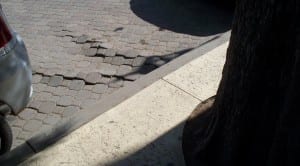
Poor root management has caused this tree’s root system to colonize immediately underneath the paving stone roadway. The subsequent pavement damage has left behind a multitude of costly maintenance repairs.
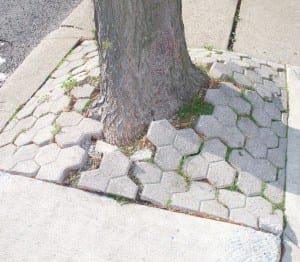
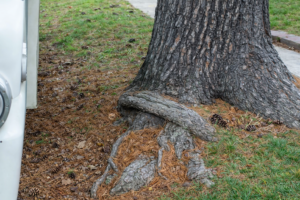
Using a RootDirector would have directed root growth to lower depths which would have prevented this upheave at the base of the tree.

Tree roots lifting and cracking the sidewalk, a common sight in urban areas.
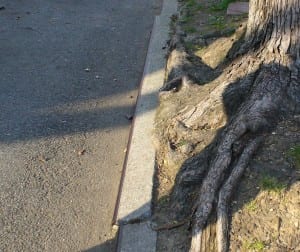
This unmanaged root system is pushing the curb out into the road, and it won’t be long before this damage increases.
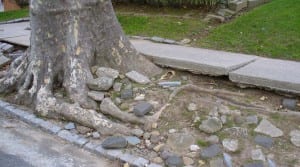
There isn’t much that can be said for this situation. And once trees are this mature, they’re not easily dealt with. What could have been easily managed at time of tree planting, is a huge problem once a tree reaches maturity like this (if it does at all in such inappropriate conditions!)
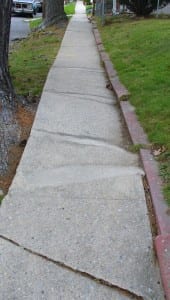
This cracking, caving, and bumpy sidewalk is typical in suburban areas where proper root management was not used in tree plantings.

Try a leisurely walk on this sidewalk!
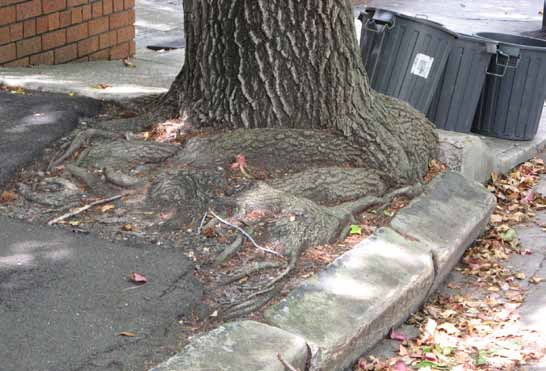 What a nightmare!
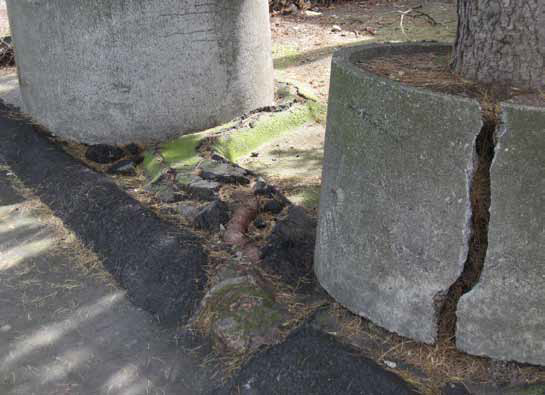 Compact planters attempt to constrain roots, but they break free!

This unmanaged root system has lifted the curb and created a drainage issue.
We hope that these examples of poorly managed root systems will help point out the importance of using properly engineered root management systems.