
Successful urban landscapes rely on more than individual products. Trees, SuDS, utilities, levels and long-term maintenance all need to work together within the same space.
By considering these requirements early in the specification process, project teams can reduce risk, simplify delivery and improve long-term performance.
Good landscape design depends on more than concept drawings. It requires systems that can be detailed, coordinated and constructed without compromising design intent.
Our systems are designed to support integrated landscape delivery across streetscapes, public realm and development environments.
We support landscape teams in developing schemes where trees, water and people work together successfully within the same environment.
Urban projects rarely follow a standard path.
Site constraints, utilities, changing requirements and competing priorities can all influence the success of tree planting and water management strategies.
Our specialists help project teams navigate these challenges, providing practical insight and technical guidance to support confident decision-making.
GreenBlue Urban systems are used across public realm, streetscape and development projects, helping landscape architects integrate trees, drainage and landscape infrastructure within complex urban environments.
These projects demonstrate practical approaches to delivering coordinated, buildable schemes that support long-term tree growth, surface water management and high-quality public realm outcomes.
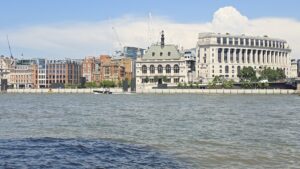
Integrating urban trees within a dense city centre public realm scheme to support healthy long-term canopy growth, coordinated infrastructure and high-quality landscape outcomes.
Combining urban tree planting with integrated landscape infrastructure to support healthy canopy growth and coordinated public realm design within a residential redevelopment scheme.
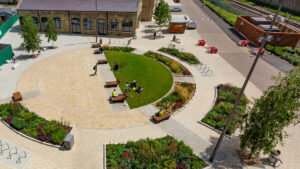
Integrating urban trees within a constrained public realm scheme to support healthy canopy growth while creating a greener, more usable courtyard environment within the dense historic setting of Covent Garden.
Updates, commentary and technical insight from the GreenBlue Urban team.
Need help selecting the right solution for your project?
Whether you require technical guidance, specification support, CAD details or product information, our team is here to help.
Complete the form and we’ll be in touch.
GreenBlue Urban can help translate the landscape concept into below-ground requirements that remain practical through technical design and construction. This includes soil volume, system layout, levels, paving interfaces, utilities, drainage, planting and installation. Clear performance requirements and coordinated details make it easier to evaluate later changes without losing the conditions the trees and SuDS features need to deliver the intended long-term landscape.
Coordination should begin with the tree and water requirements, then test them against levels, pavement loading, utilities, drainage routes and maintenance. Tree pits and rain gardens should not be fitted into leftover space after the hard landscape is fixed. Sections and plans need to show how soil, structural systems, inlets, outlets, edges and surfaces connect so that the visible design and below-ground infrastructure support one another.
Available resources include product data, CAD drawings, installation guides, soil-volume guidance, technical guides and project-specific specification support. These should be used to define performance and interfaces, not just name a product. The specification should identify required soil volume, loading, drainage function, materials, installation and approval responsibilities so that the design remains clear through pricing, value engineering and construction.
Yes. Early advice can focus on the required outcome, tree size, soil volume, runoff, available space, utilities and loading, before a system is chosen. This helps avoid selecting a product that later conflicts with the site. Once the performance brief is understood, suitable approaches can be compared and developed into a coordinated detail with the landscape architect and other disciplines.
A change can be considered, but the proposed alternative should be checked against the original performance requirements before approval. Soil volume, connectivity, structural loading, drainage, utilities, levels, installation and maintenance may all be affected. The review should also confirm who has design authority and whether planning, adoption or warranty obligations change. A lower purchase price alone does not demonstrate technical equivalence.