
Local authority projects are expected to deliver a wide range of outcomes within the same space. Streets and public spaces must support healthy tree growth, manage surface water, enhance biodiversity and remain practical to construct and maintain over the long term.
GreenBlue Urban provides technical expertise and supporting resources to help local authority teams integrate these considerations into robust, buildable solutions that perform reliably throughout their design life.
Local authorities need infrastructure that performs beyond project completion. Urban trees and drainage systems must remain effective despite changing environmental conditions, operational pressures and limited maintenance resources.
GreenBlue Urban supports projects with solutions designed to establish successfully, integrate within complex streetscapes and deliver lasting value for communities.
Local authority projects must balance environmental ambitions with operational realities. Streets, parks and public spaces need solutions that can be specified with confidence, delivered efficiently and perform reliably over the long term.
GreenBlue Urban provides integrated tree planting and water management infrastructure supported by technical expertise developed through decades of urban project experience.
Our systems are used across streets, public realm and retrofit projects, helping local authorities deliver practical, visible and durable environmental improvements within live civic environments.
These projects demonstrate practical approaches to integrating drainage, tree planting and public realm infrastructure across varied urban conditions and stakeholder requirements.
Combining urban tree planting with coordinated public realm improvements to create a greener, more attractive and resilient streetscape within one of Brighton’s busiest city centre environments.
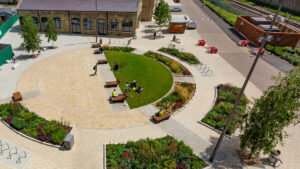
Integrating urban tree planting within a major public park redevelopment to support healthy canopy growth, improve the quality of public space and create a more resilient landscape environment for long-term use.
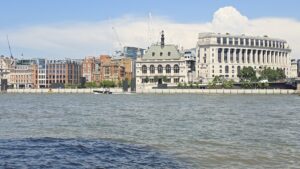
Integrating urban tree planting within a major public realm redevelopment to support healthy canopy growth, improve environmental quality and create a greener market environment within a dense urban setting.
Updates, commentary and technical insight from the GreenBlue Urban team.
Need help selecting the right solution for your project?
Whether you require technical guidance, specification support, CAD details or product information, our team is here to help.
Complete the form and we’ll be in touch.
Well-established street trees can contribute shade, cooling, air-quality improvement, biodiversity, surface-water management, road safety, public health and more attractive places. These benefits depend on trees surviving and developing useful canopy, so the below-ground design matters. Authorities gain greater value when tree planting is treated as long-term infrastructure with adequate soil, coordinated utilities and a funded maintenance plan rather than a short-term visual enhancement.
Providing suitable soil volume, water, air and root space can reduce premature tree replacement, repeated watering problems and conflict with paving. Root management and coordinated utility layouts can also reduce future disruption. The lowest initial tree-pit cost is not always the lowest whole-life cost; frequent failures, repairs and replacement planting can exceed the saving. Whole-life assessment should include establishment, maintenance, surface repairs and the value of mature canopy.
Start by identifying where runoff, planting opportunity and planned public-realm work overlap. SuDS tree pits and rain gardens can then be coordinated with highways, drainage, utilities, access and maintenance. Early cross-department working is important because the asset may serve several objectives and budgets. The design should define ownership, hydraulic function and adoption rather than leaving maintenance responsibility unresolved after construction.
Start by identifying where runoff, planting opportunity and planned public-realm work overlap. SuDS tree pits and rain gardens can then be coordinated with highways, drainage, utilities, access and maintenance. Early cross-department working is important because the asset may serve several objectives and budgets. The design should define ownership, hydraulic function and adoption rather than leaving maintenance responsibility unresolved after construction.