
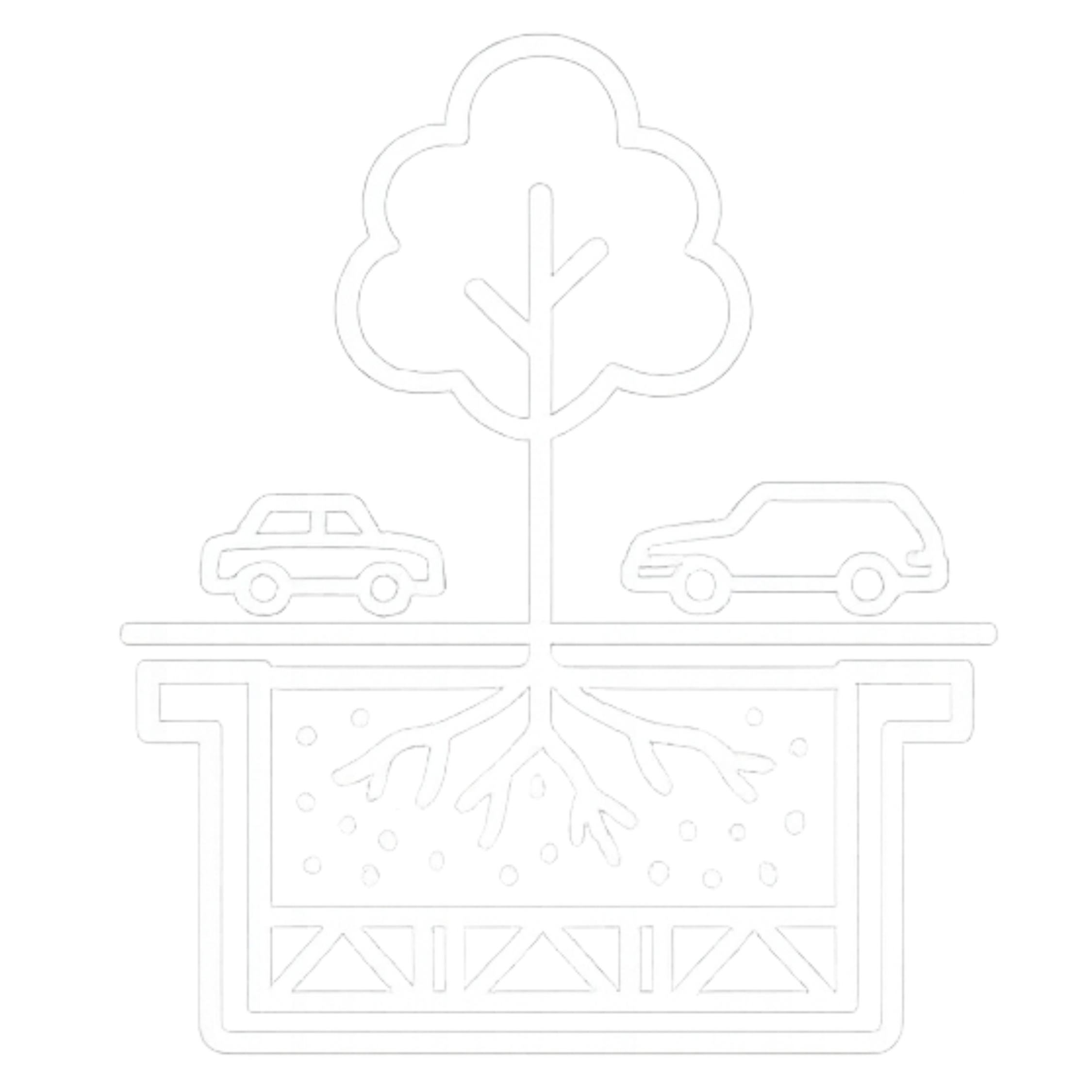
Planting trees in paved environments presents a fundamental engineering challenge. Urban trees require large volumes of uncompacted soil for healthy root development. At the same time, pavements must support loads from vehicles, pedestrians and surrounding infrastructure.
Without appropriate structural support systems:




Soil cell systems create a load-bearing structural framework beneath pavements, allowing soil to remain uncompacted and available for root development.
This approach supports both the structural requirements of the pavement and the biological needs of the tree.
Increased rootable soil volume
Improved long-term tree health and canopy growth
Reduced pavement damage caused by root pressure
Compatibility with integrated drainage strategies
When correctly designed and installed, soil cell systems allow trees to establish, grow and mature within the constraints of the built environment.
GreenBlue Urban provides several structural soil cell systems used across a range of urban tree planting applications.
Our soil cells create a structural framework beneath hard landscapes, supporting surface loads while protecting uncompacted soil volume so tree roots, water and air can move through the system.
Soil cells provide structural support beneath hard surfaces through:
RootSpace, introduced in 2016, creates large volumes of rootable soil beneath paved environments while supporting structural loads.
Maximum soil volume available for root growth
Flexible modular layouts around utilities and services
Efficient installation compatible with construction programmes
Manufactured from fully recycled material. BBA Certified
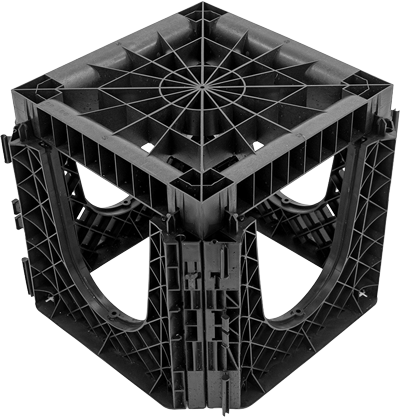
StrataCell, introduced in 2007, provides structural soil support beneath paved surfaces while maintaining soil volumes.
A solution suited to a wide range of streetscape applications
High load-bearing capacity for streets and the public realm
A modular layout for constrained or irregular tree pits
Rapid installation with tool-free click assembly
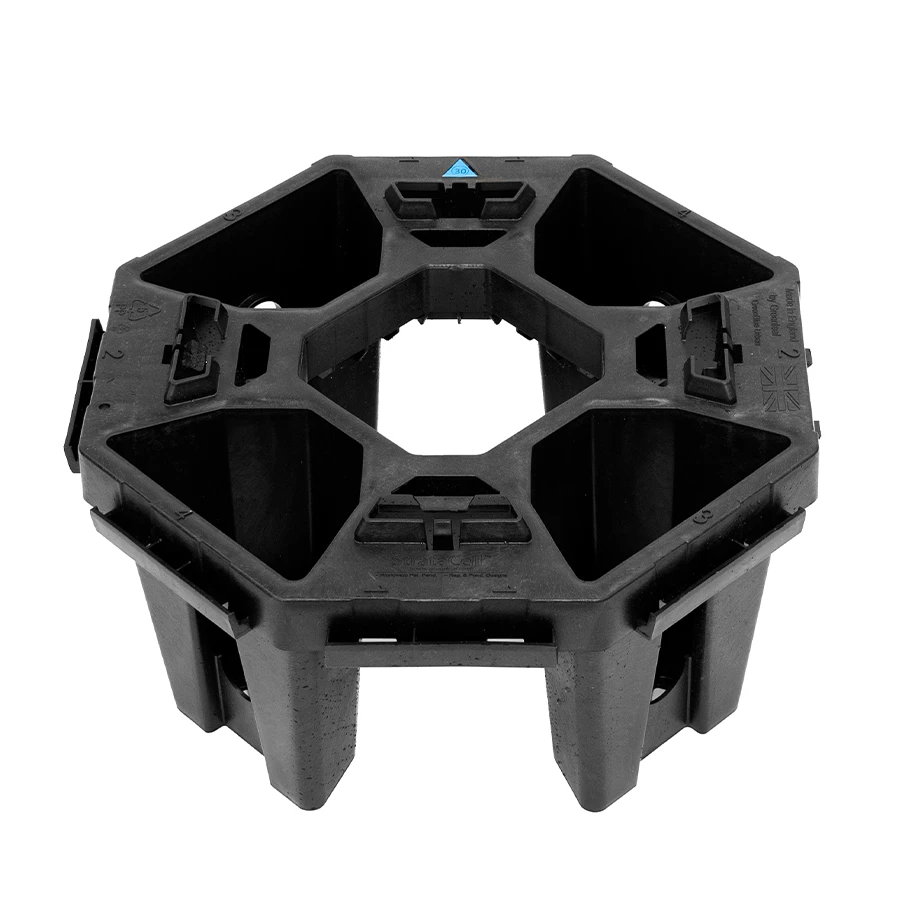
The world first commercially available modular soil cell system introduced in 2001, with 25 year proven track record in urban tree planting.
Stable underground structural support through interlocking units
Products manufactured from recycled polypropylene
Effective root development in constrained or limited spaces
A compact system for smaller planting schemes
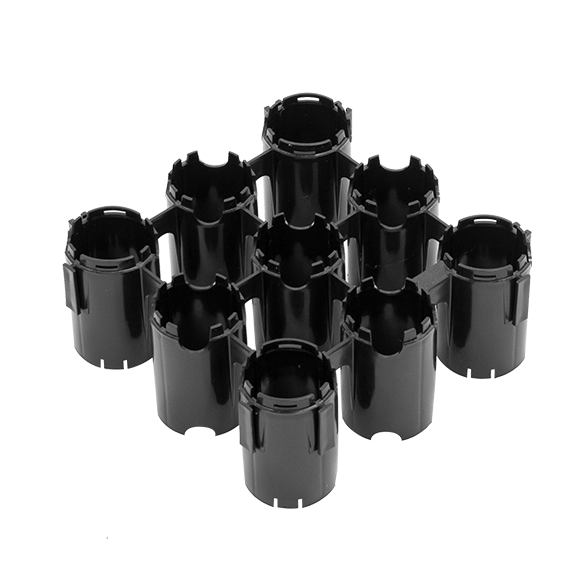
Urban trees require significant soil volumes to achieve healthy growth and long-term canopydevelopment.
Soil cell systems allow these volumes to be created beneath paved environments withoutcompromising structural performance.
Early engagement during design and specification helps ensure systems are correctly sized and integrated within the wider landscape and drainage strategy.
GreenBlue Urban supports designers and engineers with:
• Soil volume calculations.
• Tree pit layout guidance.
• Integration with SuDS infrastructure.
• Coordination with utilities and paving construction.
Early collaboration reduces risk, avoids redesign and helps ensure the infrastructure performs as intended once installed.
GreenBlue Urban polypropylene systems are manufactured using 100% recycled material derived from post-industrial and post-consumer sources, transforming existing resources into durable urban infrastructure. By keeping valuable materials in use for longer, we support a more circular approach to construction while reducing waste and helping to strengthen UK recycling and manufacturing industries.
Designed for demanding public realm applications, these systems deliver the durability and performance required for long-term use. Selected products are also supported by independently verified Environmental Product Declarations (EPDs), providing transparent environmental data to support informed specification and responsible procurement.
This is infrastructure built on the principle that materials still have value long after their first use.
Need help selecting the right solution for your project?
Whether you require technical guidance, specification support, CAD details or product information, our team is here to help.
Complete the form and we’ll be in touch.
Soil cells are load-bearing structures installed beneath hard surfaces to protect uncompacted rooting soil. The structural frame supports the pavement above, allowing the soil within and around the system to provide roots with space, water, oxygen and nutrients. They are commonly used in streets, squares, car parks and developments where the required rooting volume must extend beneath a paved or trafficked area.
Loads from the surface are transferred through the assembled structural system and surrounding pavement build-up rather than through heavily compacted growing soil. This separates the pavement’s structural requirement from the tree’s biological requirement for porous, rootable soil. The system still needs to be designed for the expected loading, correctly installed and integrated with the pavement detail so that loads are distributed as intended.
Structural soil uses a stone or aggregate skeleton to carry load, with soil occupying the spaces between the particles. Soil cells use a separate structural frame, allowing a much larger proportion of the excavation to be filled with growing soil. Both approaches can have a role, but they provide different amounts of usable soil and should be compared on connected rooting volume, site constraints, loading, installation and long-term tree requirements.
Yes, where the chosen system and project layout allow it. Open or modular systems can be configured around pipes, ducts and chambers, and in some cases services can pass through suitable openings. Coordination should happen early so that access zones, easements and future maintenance are protected. Utilities should not simply be routed through a tree pit without agreement from the relevant designers and asset owners.
Check the usable and connected soil volume, structural evidence for the required loading, system depth and footprint, utility coordination, soil placement, installation sequence and compatibility with drainage or SuDS. Product dimensions alone do not show how much soil roots can access. The specification should also identify responsibilities for design approval, quality checks and any proposed substitutions during construction.