
Urban drainage design must respond to a wide range of rainfall events while integrating with existing infrastructure, building constraints and limited available space.
In many streets, schools, developments and retrofit environments, there may be limited room for traditional SuDS features. SuDS planters help address this by combining planting, storage and controlled drainage within compact, distributed infrastructure.
Key design considerations include:




Capturing rainfall close to where it falls is a key principle of sustainable drainage. SuDS planters allow surface water to be managed upstream within the built environment, helping reduce the volume and rate of water entering drainage networks during rainfall events.
By directing runoff into planted infrastructure, these systems provide temporary storage and filtration while supporting greener urban environments.
Reduction of peak flows entering drainage networks
Temporary storage of rainfall at source
Improved water quality through filtration
Introduction of planting and biodiversity
Enhanced streetscapes and public spaces
This approach supports the wider shift toward distributed, upstream surface water management across towns and cities.
SuDS planter systems combine planting infrastructure with engineered stormwater storage and controlled drainage. Rainfall or runoff can be directed into the planter, where it is temporarily stored, filtered and released at a controlled rate.
These systems can be installed on individual developments or deployed across larger schemes aimed at improving drainage resilience across neighbourhoods, campuses and public realm programmes.
SuDS planters typically manage water through:



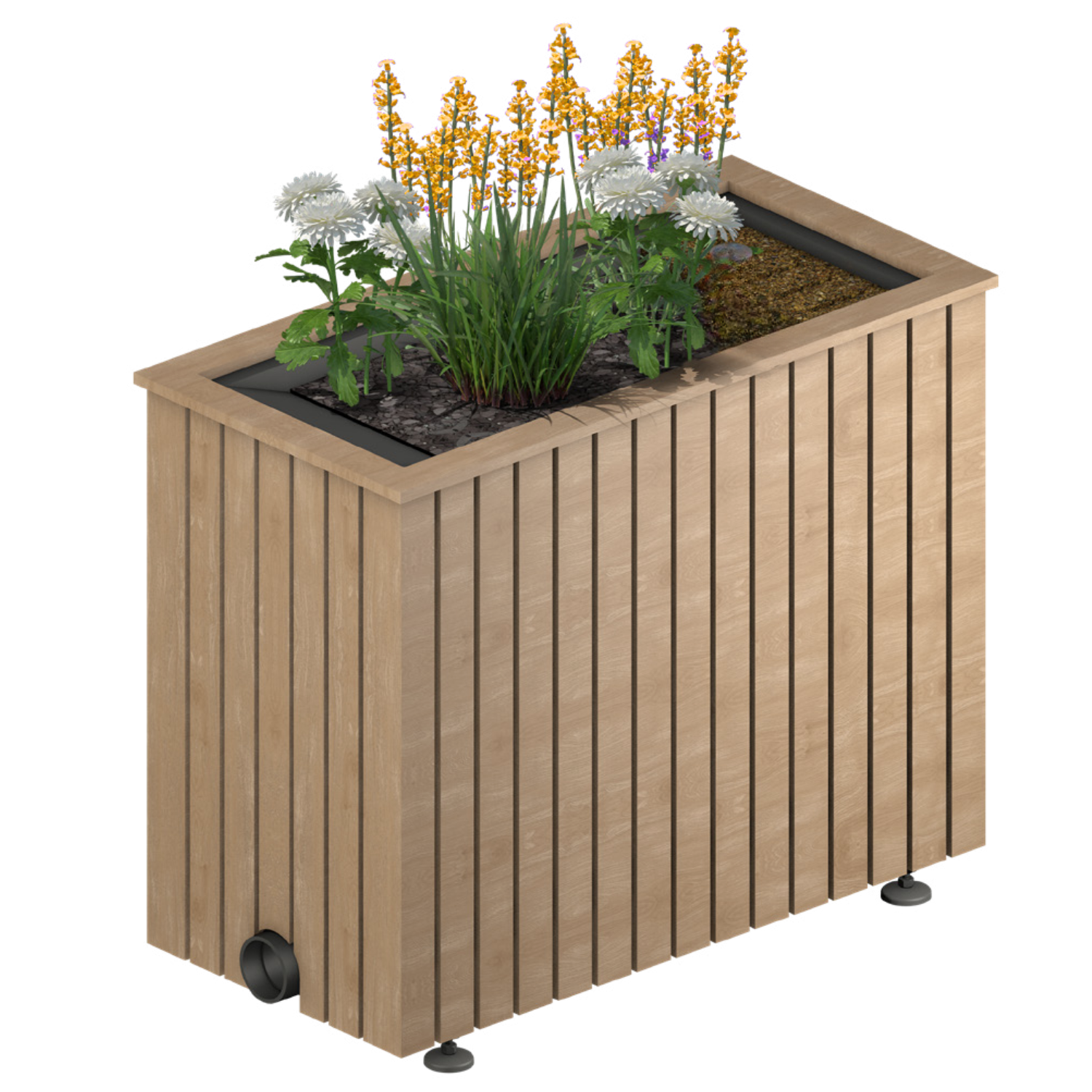
The original standard SuDSPod is designed for projects where maximum attenuation is required but water reuse is not necessary.
Maximum attenuation without water reuse
A compact-height unit for lower window or downpipe levels
Effective on-plot attenuation in limited space
A simple planter-based SuDS solution
Source control for building and retrofit environments
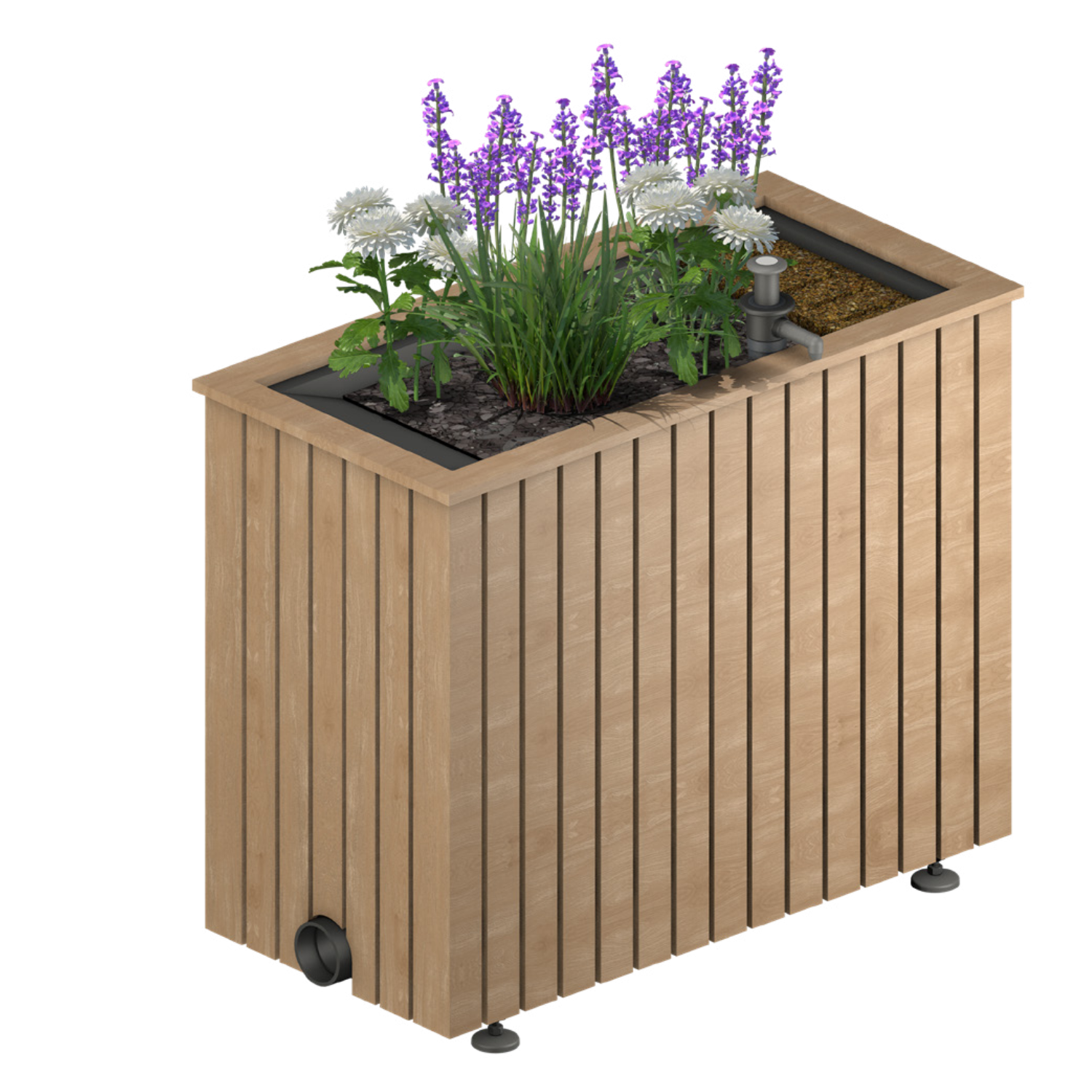
The standard SuDSPod with a pump is designed for sites where water reuse is desired but vertical space is limited.
Water reuse from a lower-height unit
A planter suited to lower window or downpipe levels
Stored rainwater for irrigation or practical reuse
A balance between attenuation and reuse
A compact option for constrained building environments
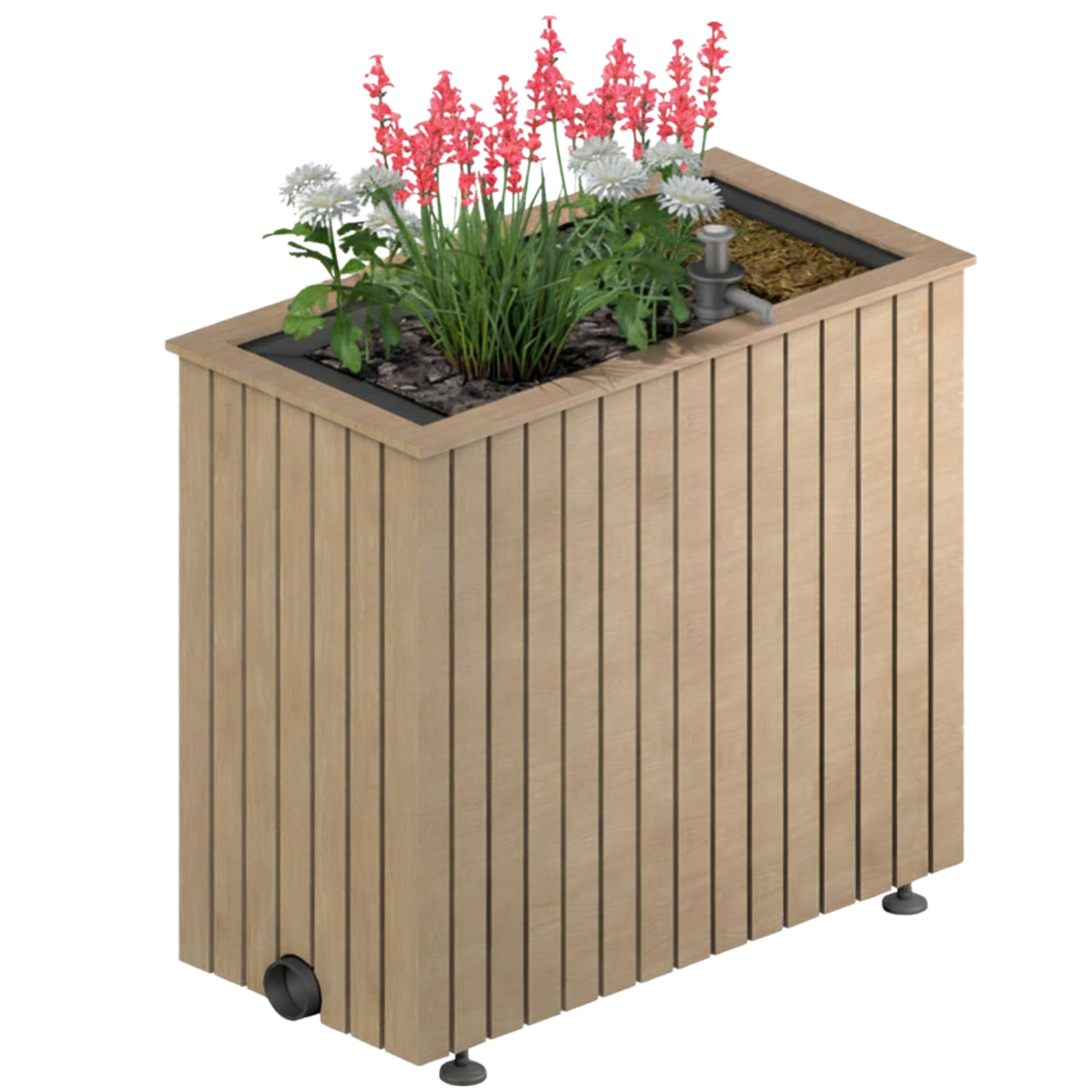
SuDSPod HIGH with a pump combines full attenuation capacity with the ability to reuse captured rainwater.
Full attenuation capacity with water reuse
A taller unit where window or downpipe heights allow
Greater internal storage within the planter
Rainwater extraction for irrigation or reuse
Both hydraulic performance and practical water reuse
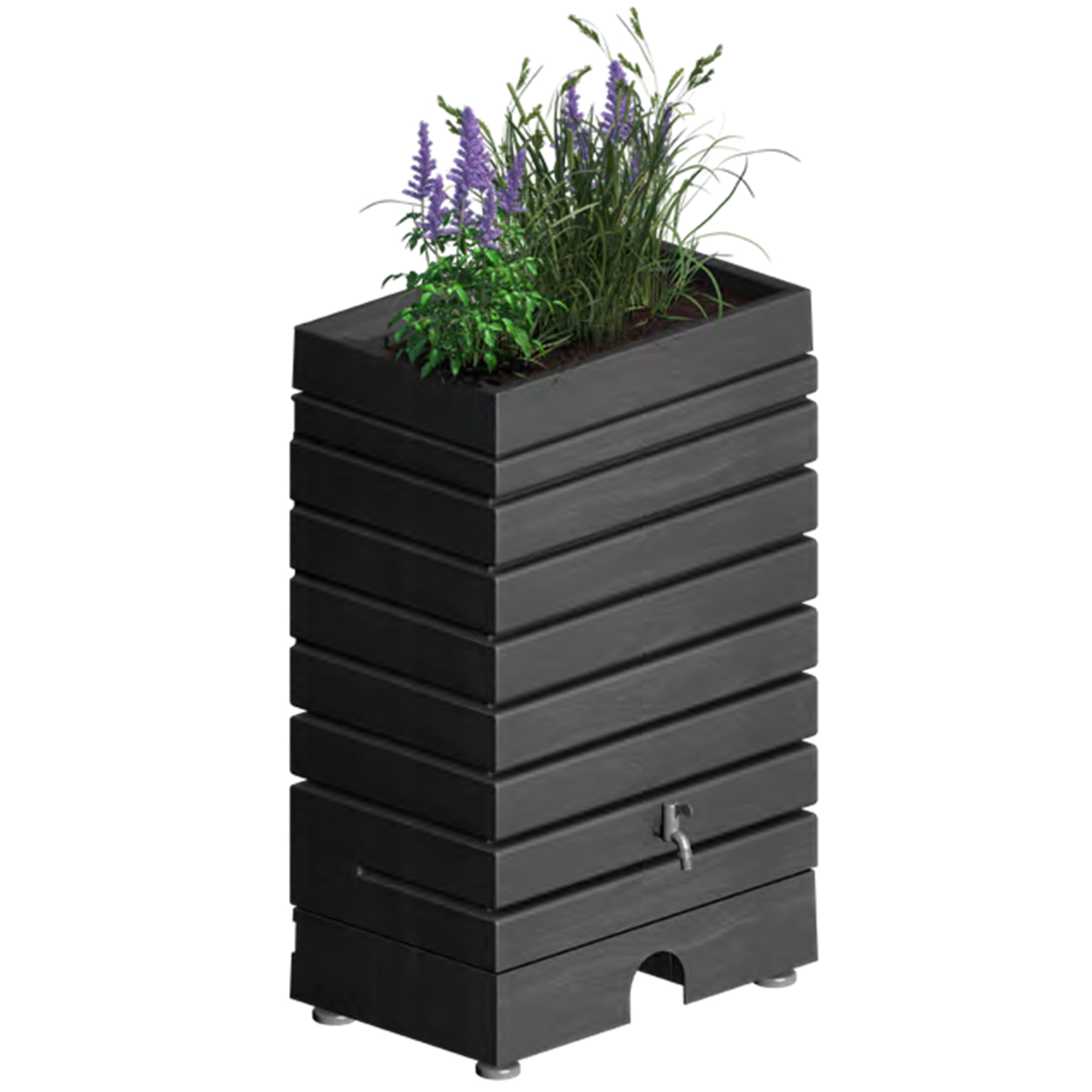
SuDSPod FLOW provides a compact, modular attenuation solution for managing roof runoff at source.
A compact attenuation solution for roof runoff
A modular system installed individually or side by side
Flexible layout and catchment coverage
A lightweight composite planter system
Effective attenuation where space is limited
Integrating SuDS planters within drainage strategies requires coordination between hydraulic design, building constraints, planting requirements and installation conditions.
Early engagement during the design stage helps ensure planter systems are correctly selected, positioned and incorporated into the wider surface water management strategy.
GreenBlue Urban regularly supports designers and engineers with:
GreenBlue Urban polypropylene systems are manufactured using 100% recycled material derived from post-industrial and post-consumer sources, transforming existing resources into durable urban infrastructure. By keeping valuable materials in use for longer, we support a more circular approach to construction while reducing waste and helping to strengthen UK recycling and manufacturing industries.
Designed for demanding public realm applications, these systems deliver the durability and performance required for long-term use. Selected products are also supported by independently verified Environmental Product Declarations (EPDs), providing transparent environmental data to support informed specification and responsible procurement.
This is infrastructure built on the principle that materials still have value long after their first use.
Need help selecting the right solution for your project?
Whether you require technical guidance, specification support, CAD details or product information, our team is here to help.
Complete the form and we’ll be in touch.
A SuDS planter is a contained, planted drainage feature that receives runoff from a defined source, often a roof downpipe or nearby hard surface. It stores and controls water close to where it falls, with planting and soil providing amenity and treatment benefits. Unlike a decorative planter, it has designed hydraulic connections, storage, overflow and discharge or reuse arrangements.
By temporarily holding roof or surface runoff, SuDS planters reduce the peak rate at which water reaches the sewer. Some configurations also support rainwater reuse, further reducing discharge. The benefit depends on the connected catchment, storage volume, outlet control and number of planters. They are most effective when included in the drainage calculations and coordinated with downpipes, exceedance and maintenance.
Yes. Their contained format can be useful where excavation, land take or disruption must be limited, including school courtyards, building edges and constrained retrofit sites. They can be installed individually or as part of a wider programme. The design still needs to consider pupil or public access, impact risk, downpipe levels, safe overflow, planting and straightforward maintenance within the live environment.
The SuDSPod range includes a standard attenuation planter, a lower-height version with a pump for water reuse, SuDSPod HIGH with full attenuation and reuse, and SuDSPod FLOW for compact, modular downpipe-connected attenuation. These options address different storage, height and reuse requirements. The correct product is selected after assessing the catchment, available level, discharge target, footprint and maintenance needs.
Sizing should consider roof or surface catchment, design rainfall, target discharge, required attenuation, available height and footprint, downpipe connection, overflow, reuse and planting. The outlet and exceedance route must be safe if the design event is exceeded. A planter should not be sized only by available wall length; it needs to be represented in the project drainage calculations and maintenance plan.