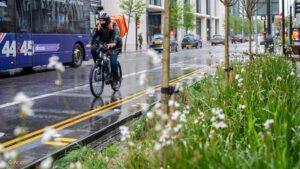
Every time it rains, millions of litres of relatively clean rainwater enter sewer networks that were never designed to carry it. Effective stormwater management reduces sewer overflows by managing rainfall where it falls rather than allowing it to enter the combined sewer network.
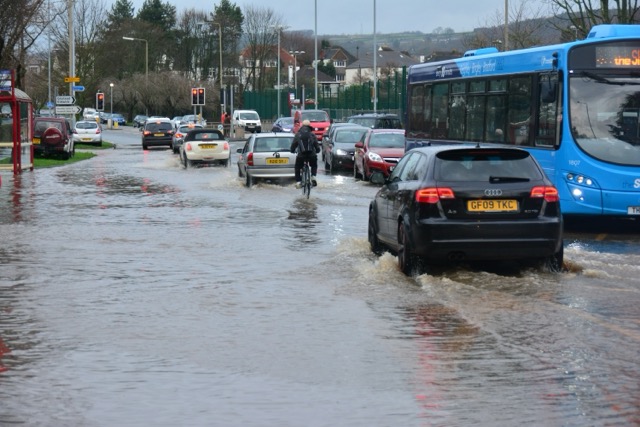
As towns and cities have expanded, more permeable ground has been replaced with roofs, roads, car parks and paved spaces. Instead of soaking naturally into the ground, rainfall is collected and rapidly conveyed into drainage systems. During heavy rainfall, those systems can quickly become overwhelmed.
The result is increased flood risk, pressure on wastewater treatment infrastructure and, in some locations, combined sewer overflows that discharge diluted wastewater into rivers and coastal waters.
While investment in sewer infrastructure remains important, there is growing recognition that the most effective place to manage rainwater is before it enters the network at all.
Why do sewer overflows happen?
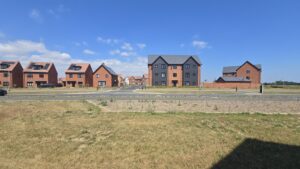
Many parts of the UK’s drainage network were constructed decades ago when urban areas were smaller, and rainfall patterns were different.
In combined sewer systems, surface water and wastewater share the same pipe network. During prolonged or intense rainfall, the volume of water entering these systems can exceed their capacity.
Combined sewer overflows (CSOs) are designed to provide emergency relief during these events, helping to prevent sewage backing up into homes and businesses. However, increasing urbanisation and more frequent extreme rainfall events mean these overflows are being activated more often than they were originally intended.
Reducing the amount of surface water entering the sewer network is therefore becoming one of the most effective ways to improve network resilience.
Stormwater management starts where rain falls
Traditional drainage has largely focused on moving water away as quickly as possible.
Modern stormwater management takes a different approach.
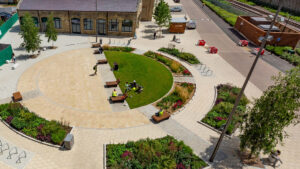
Instead of treating rainfall as a waste product, Sustainable Drainage Systems (SuDS) seek to manage water at or close to where it lands. By slowing, storing, filtering and infiltrating runoff, SuDS reduce the volume and speed of water entering conventional drainage networks.
This distributed approach provides benefits across an entire catchment rather than relying solely on larger downstream infrastructure.
Managing water at source also creates opportunities to improve public spaces, increase urban greening and support climate resilience.
Keeping water out of the sewer
Source control is one of the key principles of effective SuDS design.
Rather than collecting runoff from multiple locations before conveying it into underground pipes, source control intercepts rainfall close to where it lands.
Examples include:
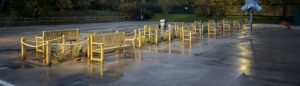
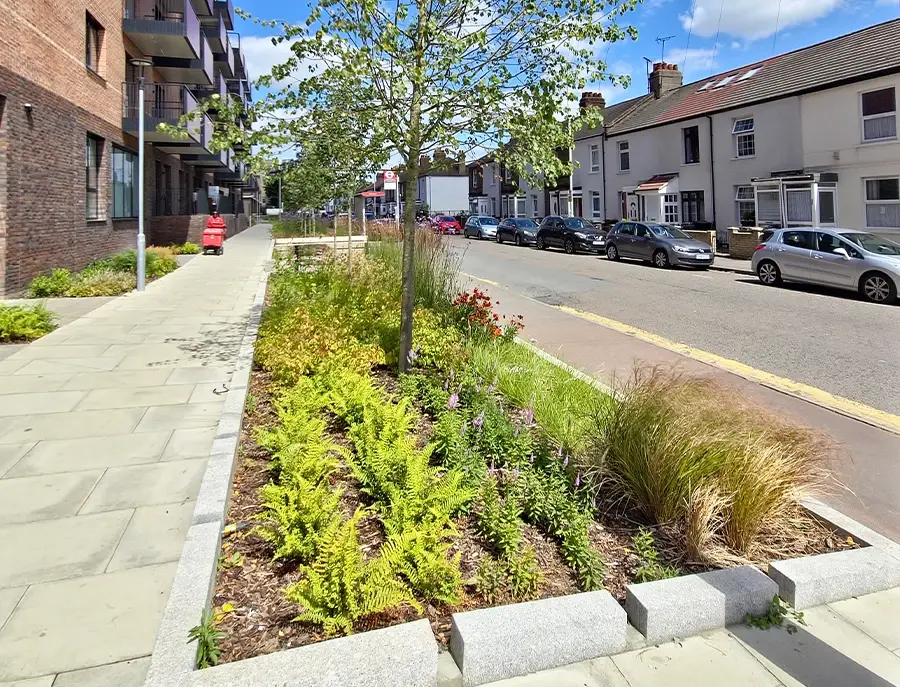
- Rain gardens that temporarily store and filter runoff.
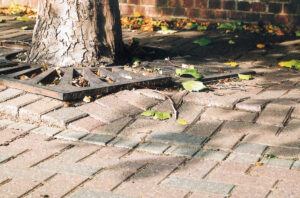
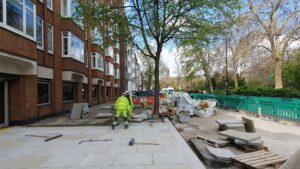
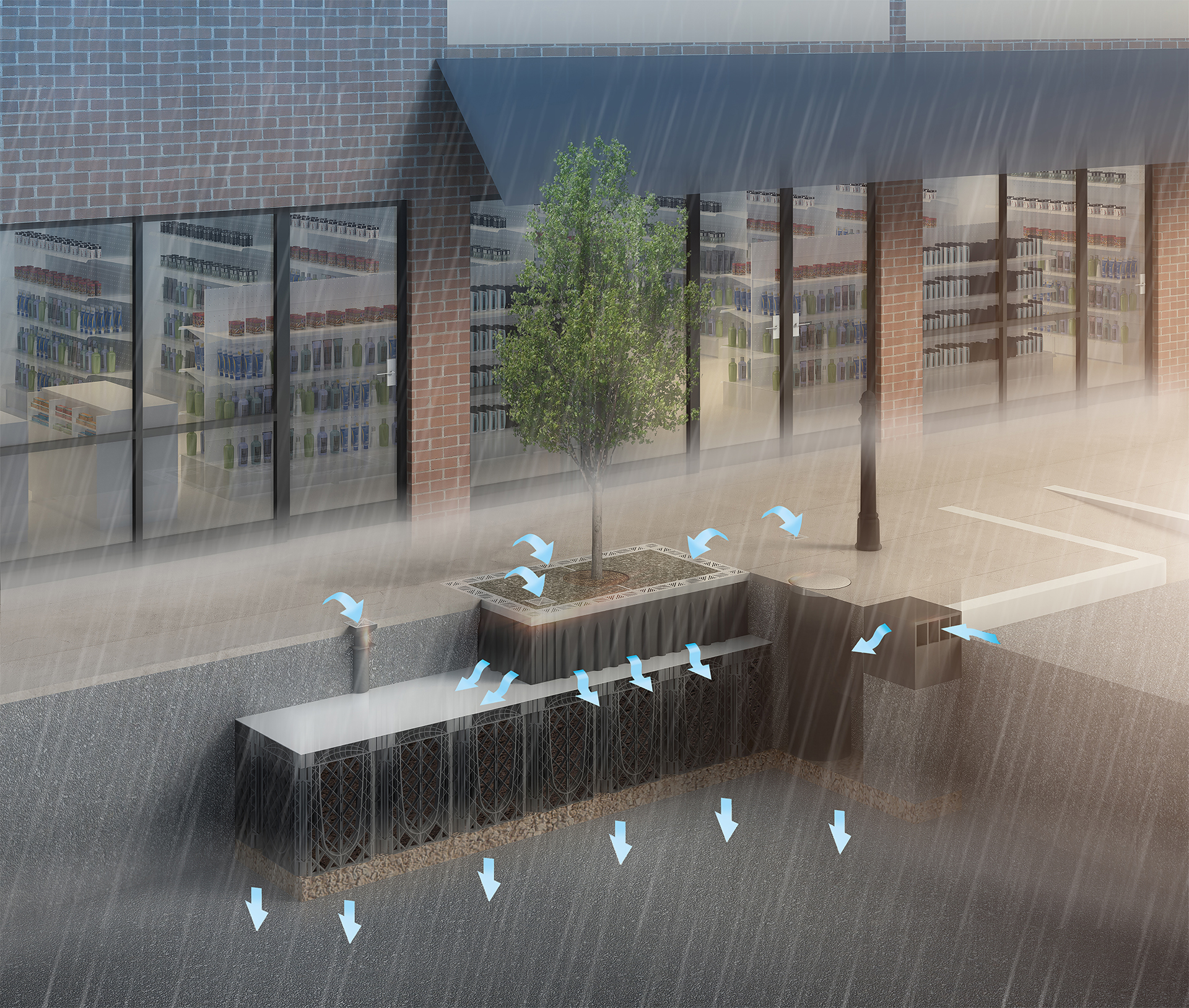
- Street trees designed to receive and manage surface water.
- Bioretention systems that combine planting with engineered growing media.
- Permeable surfaces that allow rainfall to infiltrate into the ground.
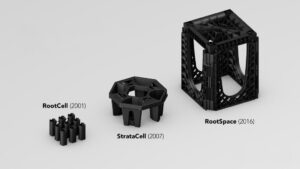
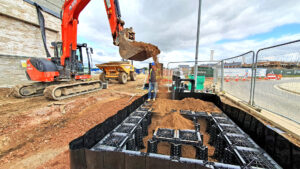
- Below-ground storage systems that attenuate runoff before controlled release.
Each intervention may appear relatively small, but together they significantly reduce the cumulative volume of water entering the sewer network during storm events.
More than flood reduction
Managing rainwater at source delivers benefits far beyond drainage performance.
Well-designed SuDS improve water quality by filtering pollutants before they reach rivers and watercourses. They introduce vegetation into urban environments, creating habitat for wildlife while helping to reduce the urban heat island effect.
Street trees integrated with SuDS also receive more consistent access to water, supporting healthier growth and longer life expectancy. This allows a single piece of infrastructure to contribute simultaneously to flood resilience, biodiversity, air quality, urban cooling and improved public spaces.
These wider outcomes are increasingly important as local authorities, developers and water companies seek solutions that deliver multiple benefits from a single investment.
Delivering resilient places
Reducing sewer overflows cannot be achieved through larger pipes alone.
As investment across AMP8 accelerates, attention is increasingly shifting towards catchment-based approaches that manage water before it reaches the drainage network. Nature-based solutions, retrofit SuDS and integrated landscape design all have an important role to play alongside traditional engineering.
By managing rainfall where it falls, towns and cities can reduce pressure on ageing sewer infrastructure while creating greener, healthier and more resilient places.