When urban tree planting projects are discussed, much of the conversation centres around the finished outcome. How much soil volume is available? Will the tree have enough rooting space? What level of canopy cover will be achieved in the future?
These are all important questions. But they focus on what happens after construction is complete.
The reality is that the long-term success of an urban tree can be influenced long before it is planted. In many cases, the decisions made during installation have just as much impact on future performance as the specification itself.
As cities continue to invest in urban greening, SuDS and climate resilience, it is worth asking whether we pay enough attention to one of the most critical stages of any project: construction.
The Challenges of Building Green Infrastructure in Urban Environments
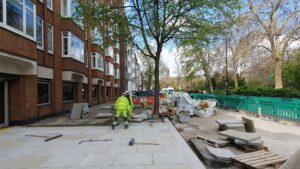
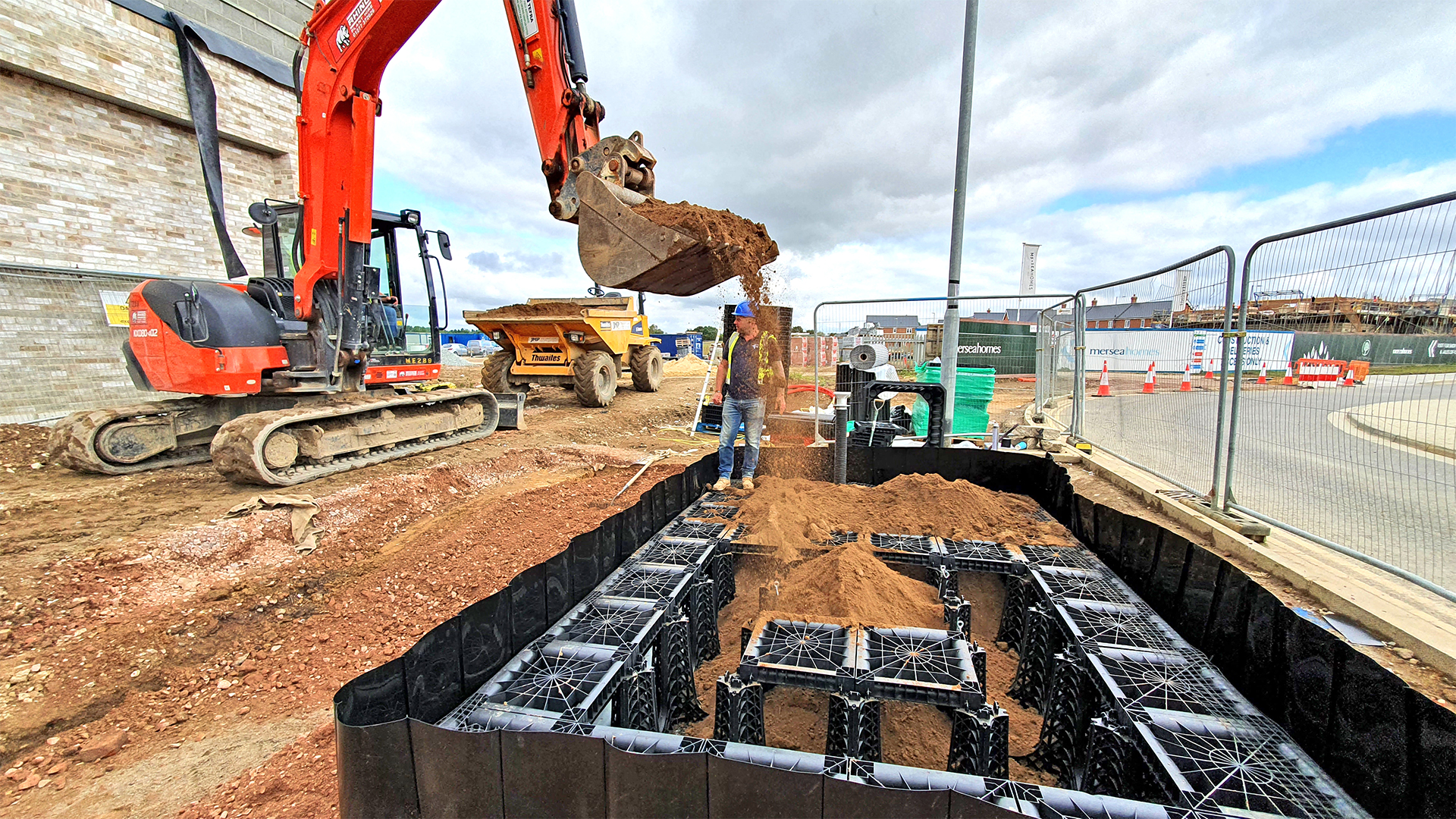
Unlike natural landscapes, urban trees must establish within highly engineered environments. Structural tree pit systems are often installed alongside highways, utilities, drainage infrastructure and public realm improvements, all within constrained construction programmes.
During installation, these systems are exposed to a range of pressures that do not exist once the project is complete. Temporary loading from construction activity, movement across site, sequencing changes and evolving site conditions can all place stress on the structure before a tree is ever planted.
While these challenges are a normal part of construction, they can create risks if the tree pit system is unable to maintain its alignment and stability throughout the installation process.
Looking Beyond Soil Volume
Over recent years, discussions around structural soil cells have often focused on soil access during installation.
The assumption is straightforward: the more open a system is during construction, the easier it is to place and compact soil throughout the structure.
While soil placement is undoubtedly important, it is only one part of a much bigger picture.
The more fundamental question is whether the system can maintain structural coherence throughout the construction process.
After all, soil volume only delivers long-term value if it remains protected. If alignment is compromised during installation, or if additional temporary stabilisation measures introduce complexity and risk, the benefits of that soil volume can quickly be reduced.
Successful urban tree planting depends not only on providing space for roots, but also on protecting that space from the moment construction begins.
Installation is Part of Engineering Performance
Too often, installation is treated as a separate consideration from engineering design.
In reality, the two are closely linked.
A structural tree pit system should perform when the finished surface is complete, and it should also provide stability and reliability throughout the build process itself.
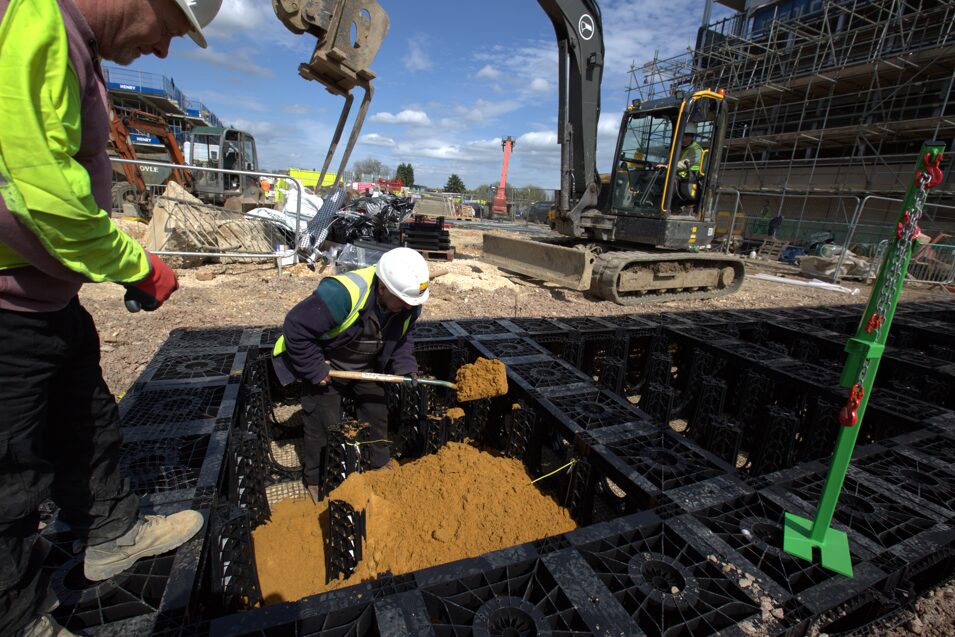
This means maintaining alignment during filling operations, supporting safe access for installers, minimising unnecessary construction stages and reducing the potential for movement before the structure is fully assembled.
When installation is considered as part of the overall engineering performance of a system, projects can benefit from greater consistency, reduced risk and improved construction efficiency.
Just as importantly, the conditions required for long-term tree establishment are protected from day one.
Building Stability into the Construction Process
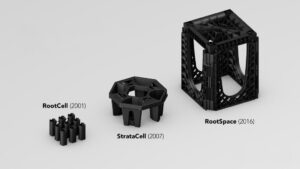
This is one of the principles that has guided the development of RootSpace.
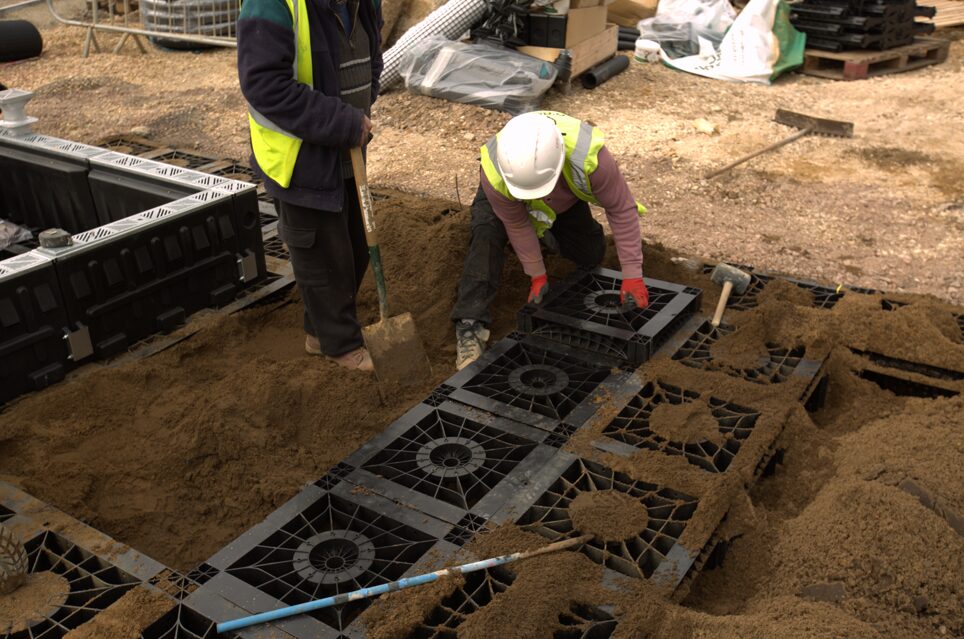
Rather than relying on temporary stabilisation components during installation, the system is designed to achieve structural stability early in the construction sequence. Perimeter lids are installed at an early stage to secure the structure and maintain alignment while soil is progressively placed and compacted.
This approach helps create a stable working environment during installation, allowing contractors to move freely within the structure while maintaining consistent geometry throughout the build process.
The result is a simpler installation sequence with fewer components, reduced material handling and less reliance on temporary measures that require additional storage, management and removal on site.
Most importantly, it helps ensure that the soil volume specified at design stage remains protected throughout construction.
Designing for Long-Term Success
As urban greening projects continue to grow in scale and ambition, the industry’s focus must extend beyond specification alone.
Providing adequate soil volume remains essential. But long-term tree performance also depends on how effectively that volume is protected during construction.
Structural stability, alignment and installation methodology may not always receive the same attention as canopy cover targets or soil volume calculations, yet they play a crucial role in determining whether a system performs as intended over the decades that follow.