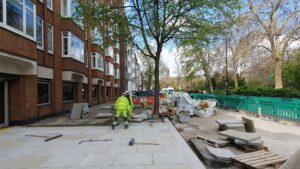
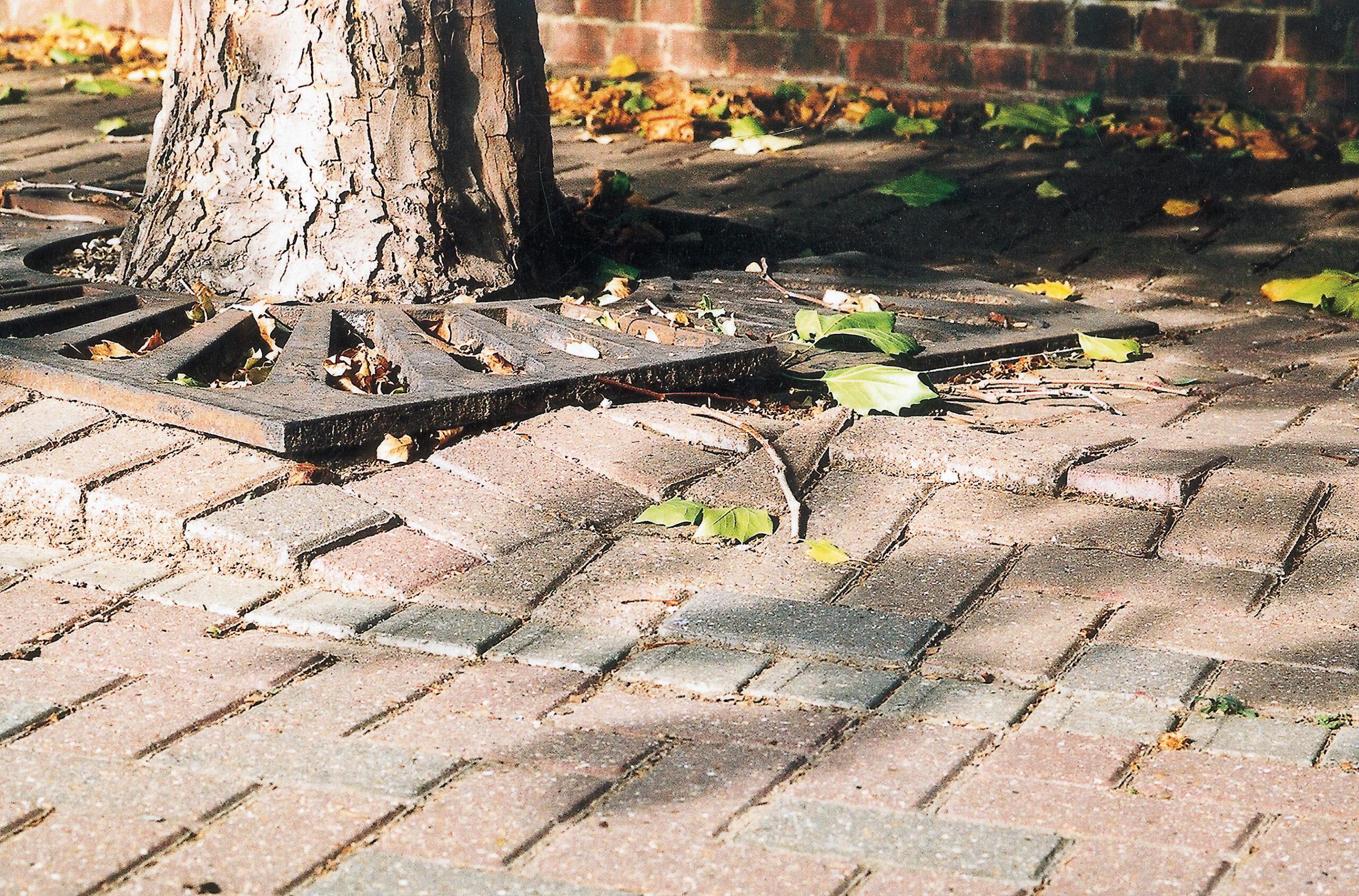
Lifted kerbs, cracked paving and uneven footpaths are often blamed on tree roots. It’s one of the biggest concerns surrounding urban tree planting, particularly in streets, public spaces and hard landscapes where trees sit alongside roads, utilities and buildings.
In reality, tree roots are rarely the problem. Pavement damage is usually the result of poor below-ground design. When trees are provided with sufficient soil, oxygen and space to establish, roots are far less likely to create conflicts with surrounding infrastructure.
Why Do Tree Roots Damage Paved Surfaces?
Tree roots naturally grow towards the air, water and nutrients they need to survive.
In some tree planting systems, however, the surrounding soil ends up heavily compacted to support roads and pavements, leaving very little suitable rooting space.
Without adequate soil volume, roots follow the path of least resistance, often growing immediately beneath paved surfaces. As they increase in size, they can lift and displace the pavement above, creating cracked paving, uneven footways and displaced kerbs. This is known as root heave.
Root heave is rarely caused by aggressive root growth. More often, it is a response to inadequate growing conditions below ground.
How Can Pavement Cracking and Displacement Be Prevented?
The most effective way to reduce root heave is to provide sufficient uncompacted soil volume from the outset.
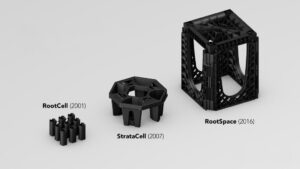
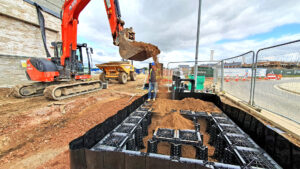
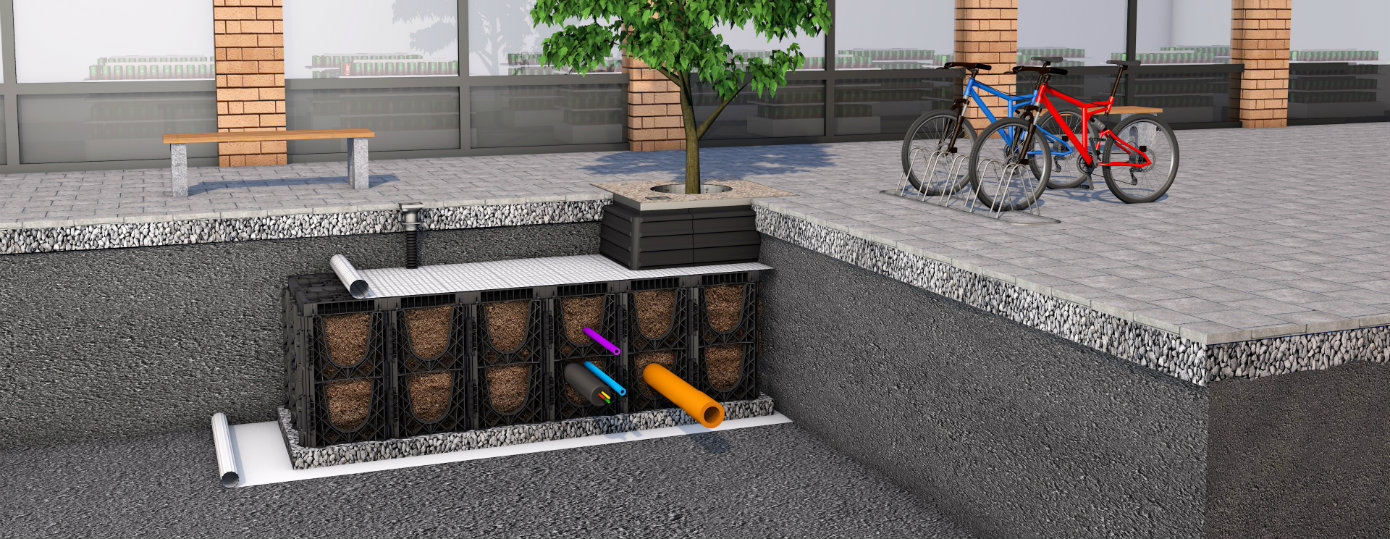
Structural soil cell systems make this possible by supporting the pavement independently while creating large volumes of healthy rooting space beneath hard landscapes.
GreenBlue Urban’s RootSpace system maximises available soil volume while providing the structural support required for the pavement above. This allows both the tree and the surrounding infrastructure to be considered as part of the same integrated design.
Can Tree Roots Damage Buildings?
Tree roots growing near buildings, drainage infrastructure and underground utilities are another common concern.
The solution is not to avoid planting trees in constrained urban environments, but to design the rooting environment appropriately.
Tree species, soil conditions, available rooting volume, surrounding infrastructure and anticipated mature size should all be considered during the design process. When combined with appropriate root management measures, trees and infrastructure can successfully coexist.
Installation is Part of Engineering Performance
Too often, installation is treated as a separate consideration from engineering design.
In reality, the two are closely linked.
A structural tree pit system should perform when the finished surface is complete, and it should also provide stability and reliability throughout the build process itself.
This means maintaining alignment during filling operations, supporting safe access for installers, minimising unnecessary construction stages and reducing the potential for movement before the structure is fully assembled.
When installation is considered as part of the overall engineering performance of a system, projects can benefit from greater consistency, reduced risk and improved construction efficiency.
Just as importantly, the conditions required for long-term tree establishment are protected from day one.
Building Stability into the Construction Process
This is one of the principles that has guided the development of RootSpace.
Rather than relying on temporary stabilisation components during installation, the system is designed to achieve structural stability early in the construction sequence. Perimeter lids are installed at an early stage to secure the structure and maintain alignment while soil is progressively placed and compacted.
This approach helps create a stable working environment during installation, allowing contractors to move freely within the structure while maintaining consistent geometry throughout the build process.
The result is a simpler installation sequence with fewer components, reduced material handling and less reliance on temporary measures that require additional storage, management and removal on site.
Most importantly, it helps ensure that the soil volume specified at design stage remains protected throughout construction.