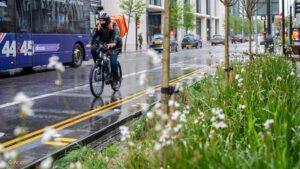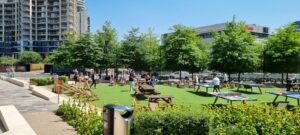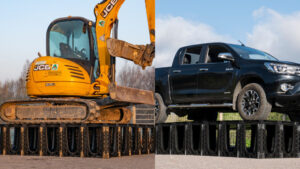
In London and large cities like New York in North America, Nearly 80% public open space is comprised of streets and roads; thoroughfares that for over one hundred years have been dominated by motor vehicles.
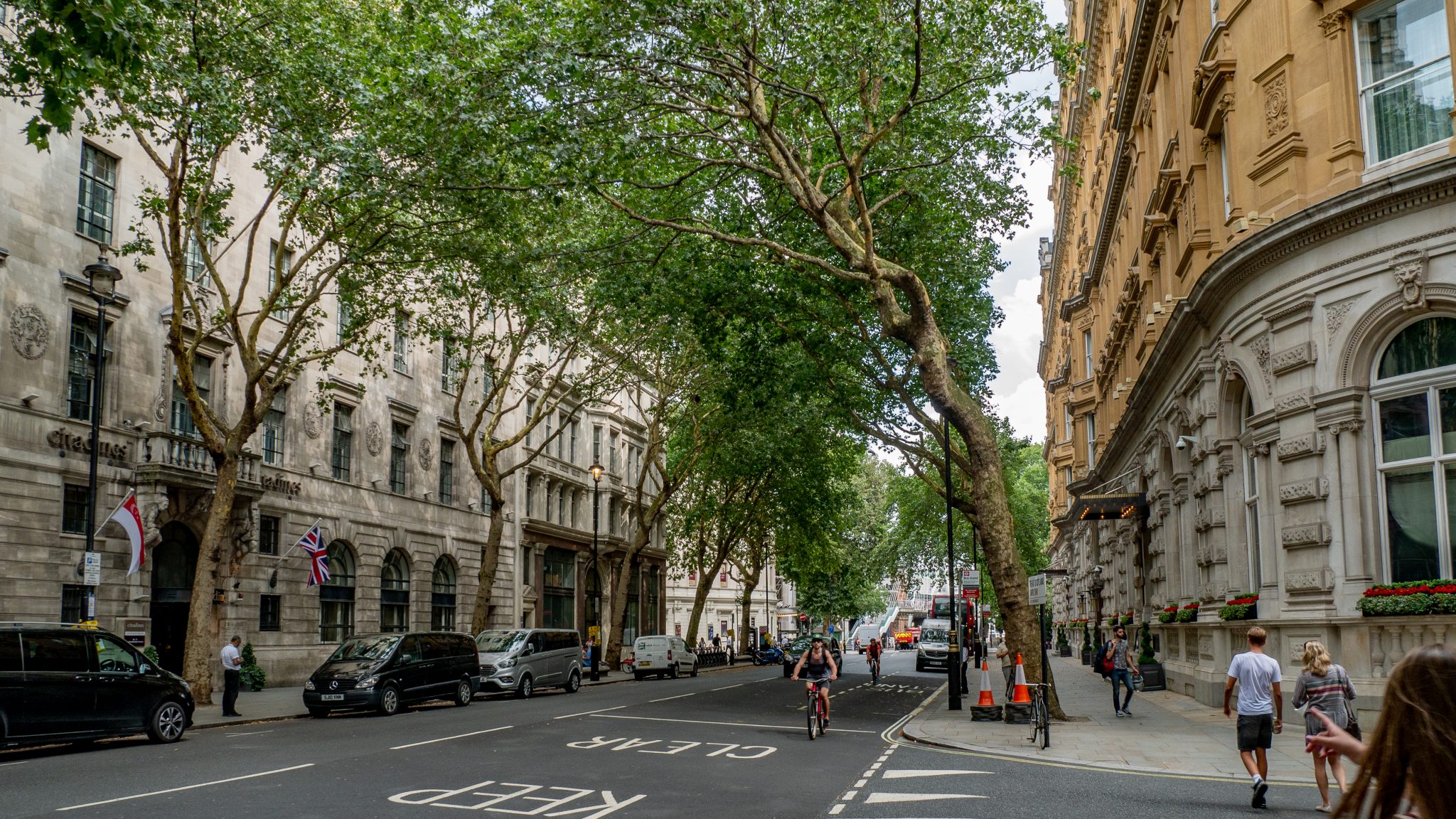
It wasn’t always so: early motor vehicles had to be preceded by a man with a red flag to ensure that pedestrians and animals were not at risk of being harmed by the large and noisy machines.
The lock down has given unique opportunities to reconsider how much space we really want or need to allocate to motor vehicles, how much to pedestrians and how much to cyclists. Public transport needs must be carefully planned to maximise passenger numbers, but minimise space taken in the public realm, and redesign our streets for the uses we predict for the future.
As we plan to reconfigure our urban realm, where should we start? Should it by thinking of pedestrians? Cyclists? Residents? Businesses? If our town and cities are to be truly resilient and sustainable places for all users, we must give a higher priority than we have done historically to green infrastructure – our parks, gardens, trees and other elements of planting. Too often other elements in our urban landscape have been viewed as of greater importance and thus we have areas which are unpliant, unhealthy and unsafe.
© WillNorman
Local authorities and municipalities often say that they have no funds to maintain green infrastructure, but when we look at the multiple and enormous benefits that accrue from healthy planting, and trees in particular, it is clear that these benefits more than cover any small maintenance liabilities, but unfortunately, these benefits do not usually fill the local authority/municipalities coffers. Benefits such as health and well being increases, reduced stormwater issues and less road traffic collisions bring real savings; these need to be redeployed to make the maintenance net zero in cost.
In the UK, they’ve announced a £2 billion government package to increase cycling and walking, we will start to see pop-up bike lanes with protected space for cycling, wider pavements, safer junctions, and cycle and bus-only corridors in England within weeks. TfL have released a new Planning for Walking Toolkit which provides tools to support the development of public realm design briefs in London, with important considerations for green infrastructure.
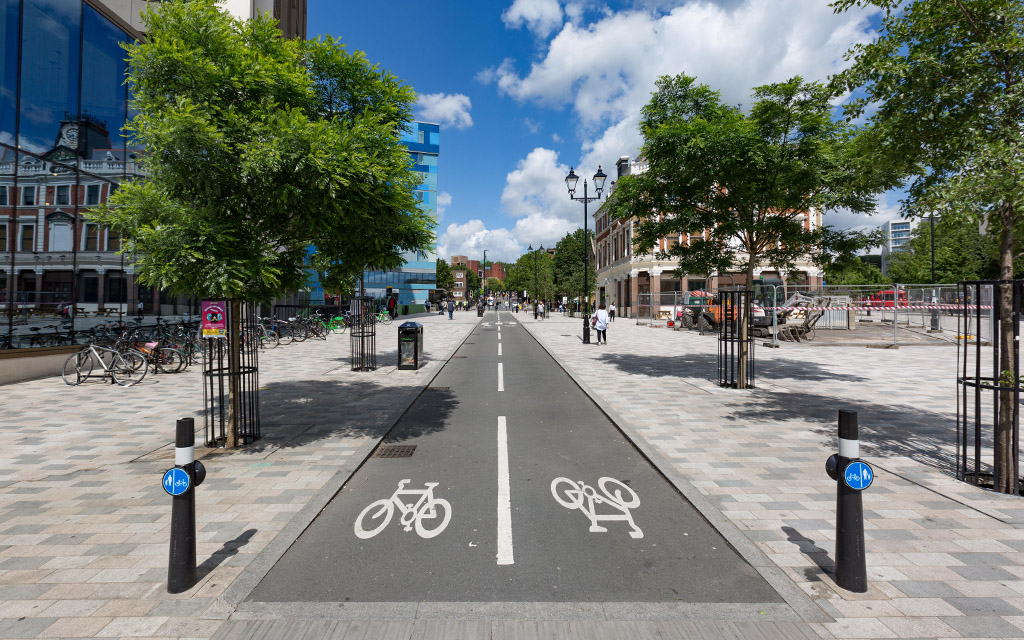
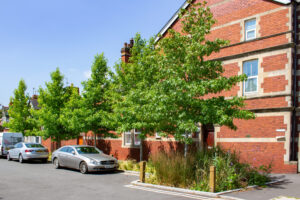
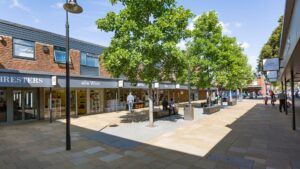
GreenBlue Urban have proven many times that properly planted trees and plants can enhance the life experiences of everyone who lives, works and plays in urban areas. Well planned, correctly installed and suitably maintained, these green oasis bring life changing differences to many residents, particularly those with limited personal access to private greenspace.

Adding to these pockets of green infrstructure by use of green planted barriers such as the PlantSpace modular lane divider, the ArborSystem Tree Planting Systems and the innovative HydroPlanter is the quick and inexpensive way to alter our public realm to encourage a permanent alteration in our way of life. Making healthy cities through changing streetscapes.