The pastel coloured houses, many of which are thatched, and the rich biodiverse beauty of the broads make Norfolk and Suffolk – East Anglia ideal destinations for walkers and those seeking more leisurely trips. These two counties offer a wealth of possibilities for nature based exploration and adventure. However, there are some obvious challenges to maintaining the integrity and quality of the green and blue infrastructure. Charlotte Markey visited both County Councils to discuss how pressure on housing supply, the localism agenda and the drive for growth in Greater Norwich and Ipswich will be managed in the long term. Norwich City Council were among the first in the country to pioneer a robust and well-argued strategy for trees and to implement clear and concise SPGs (Supplementary Planning Guidance) for developers. This was to ensure that trees are considered as vital components of design, resident’s health and long term added value for increasing biodiversity and mitigating against climate change.
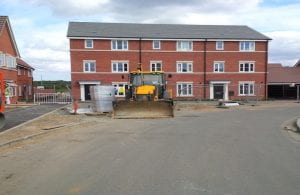
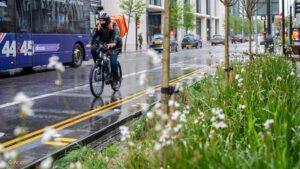
Norwich – Wroxham Road
In Suffolk Charlotte was delighted to hear that work GreenBlue Urban had done to improve the highways in and around Ipswich had made a real difference to the way that the city viewed the possibilities of integrating natural infrastructure in and around major transport thoroughfares.
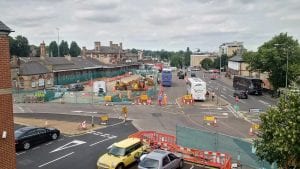
Ipswich Train Station
Green and blue infrastructure and the continued enhancement of urban street trees will not just be restricted to the major towns and cities in these two predominantly rural and agricultural counties. It is clear that at county level in both Norfolk and Suffolk there are long term visions that are continually being developed. Commuters from more rural areas and those living in vibrant communities developing neighbourhood plans will all have a role to play in creating policy that will define and determine how urban extensions and new development will contribute to the network of existing green spaces.
What remains unique and distinctive about these East Anglian counties is the diversity of communities nestled within. From well-connected commuter towns, to villages predominantly populated by second-home owners, there is a common goal across these two counties that green infrastructure and a more extensive network of SUDs schemes will be necessary to deliver better quality developments and ensure better health outcomes for all those who travel in and out of East Anglia. Using systems such as ArboFlow and low maintenance soil support systems like RootSpace, enables district authorities to integrate cost effective SUDs solutions on smaller scale regeneration projects. This will enhance villages and boost retail and tourism and also provide county highways teams with opportunities to connect these places with greener, healthier networks.