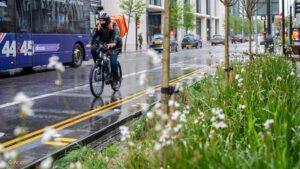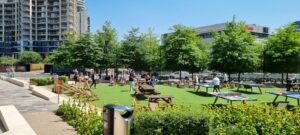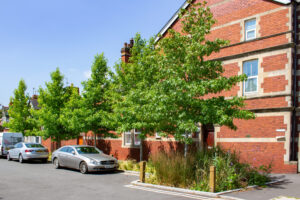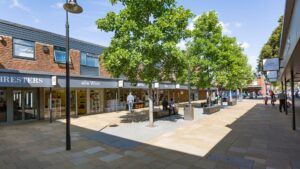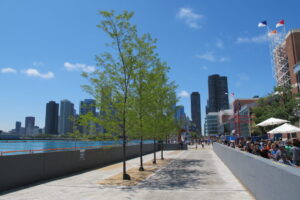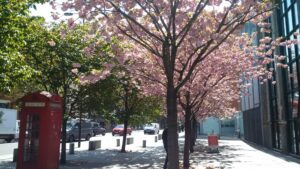
Urban greening has been an effective initiative in rejuvenating deprived city areas over the years. Studies conducted in the US and UK have proved that the creation of public open spaces regenerates urban areas and encourages further investment. Trees are a vital component to creating open spaces, as they offer immediate and long-lasting visual impact.
New parks, greenways, and street trees built in Chattanooga, Tennessee between 1988 and 1996 injected an estimated $500 million into the city through investment and development growth. In addition, the number of businesses and full-time jobs more than doubled in the district, while assessed property values went up over $11 million – an increase of 127.5% (Lerner and Poole, 1999). While these economic benefits cannot be solely related to an increase in the number of trees, there is a strong correlation with visual and physical access to green environments. Because large species trees provide substantial green cover while being able to be planted in urban landscapes, they can meet this objective.
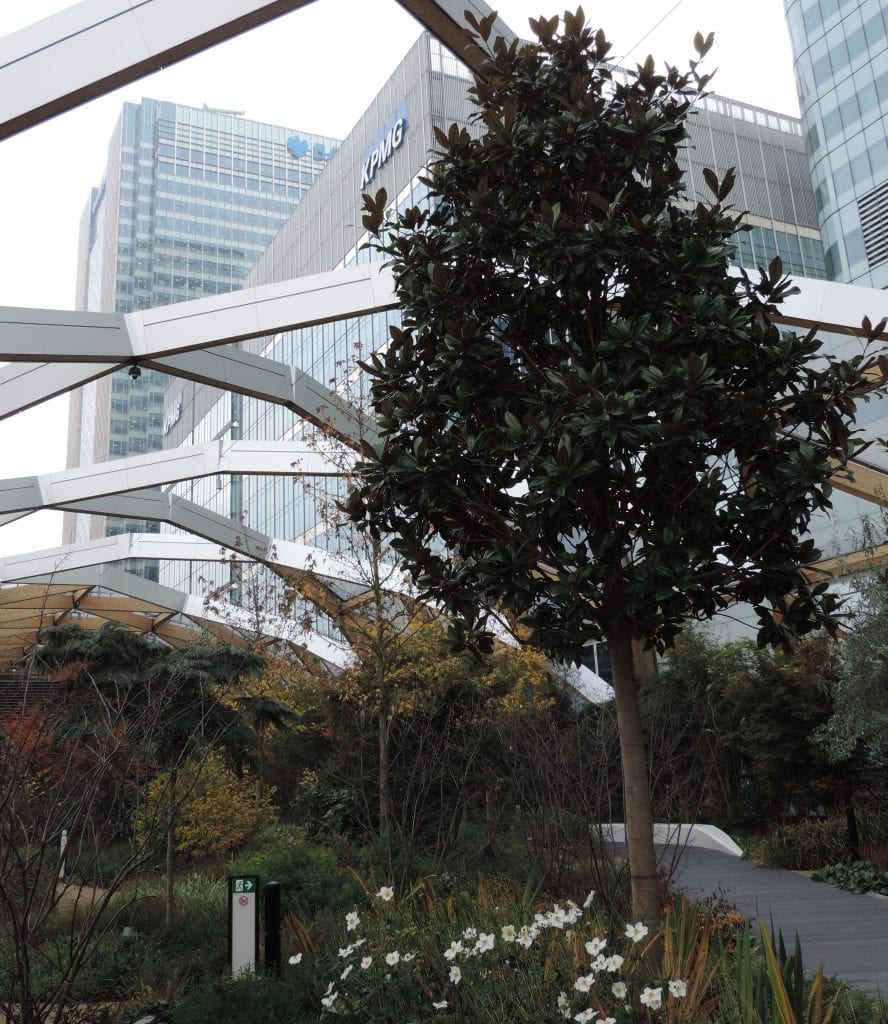
Canary Wharf Station in the UK is a good example of significant private investment being made into large species tree planting, in order to provide immediate greening for this urban park setting. Businesses in heavily urbanized areas are prepared to pay a premium to be located in green environments like this, illustrating that the initial investment in tree planting can lead to higher rental yields that more than cover the cost of tree plantings – especially trees that are planted for success so they thrive.
In the goal to plant healthy trees that reach maturity, there are four main areas that should be focused on:
- Uncompacted soil volume so that trees have ample rooting space to mature quickly
- Irrigation and aeration into the soil so that trees have the water and oxygen their roots need
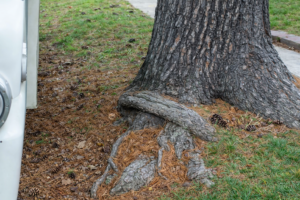
- Root management to keep tree roots within intended rooting areas and away from adjacent sidewalks and underground utilities
- Rootball guying to support trees in a maintenance-free and aesthetically pleasing way that does not propose pedestrian liability
Considering the high level of public investment in other infrastructure, like roads and sewers, trees offer comparatively good value for money. As a matter of fact, trees are one of the only urban improvement investments that improve with age. While built infrastructure like roads and sewers degrade over time, trees provide more benefits the older they get.
Trees are one of the only urban improvement investments that provide more benefits the older they get, while built infrastructure like roads and sewers only degrade over time
Public investment in Boulder, Colorado resulted in the funding of over 40,000 acres of open space improvements, including a ring of greenbelts around the edge of the city. Since the completion, residents have been willing to pay a premium to live near these areas, which the resulting increase in taxes has more than paid for. In one neighborhood, total property values increased by $5.4 million after the greenbelt was completed, generating $500,000 per year in extra property taxes – enough to recover the $1.5 million cost of the greenway project in only three years.
New greenspace creation and urban tree plantings are one-time investments that boost property values and increase tax revenues long after projects are completed and paid for. By increasing the value of homes in this way, urban trees and other greenspace provide benefits in terms of increased taxes paid to government (De Brun). The resulting increased tax revenues and property values that healthy urban trees offer means that the initial investment of urban tree planting can be easily recouped by local authorities and developers in a reasonable timeframe.