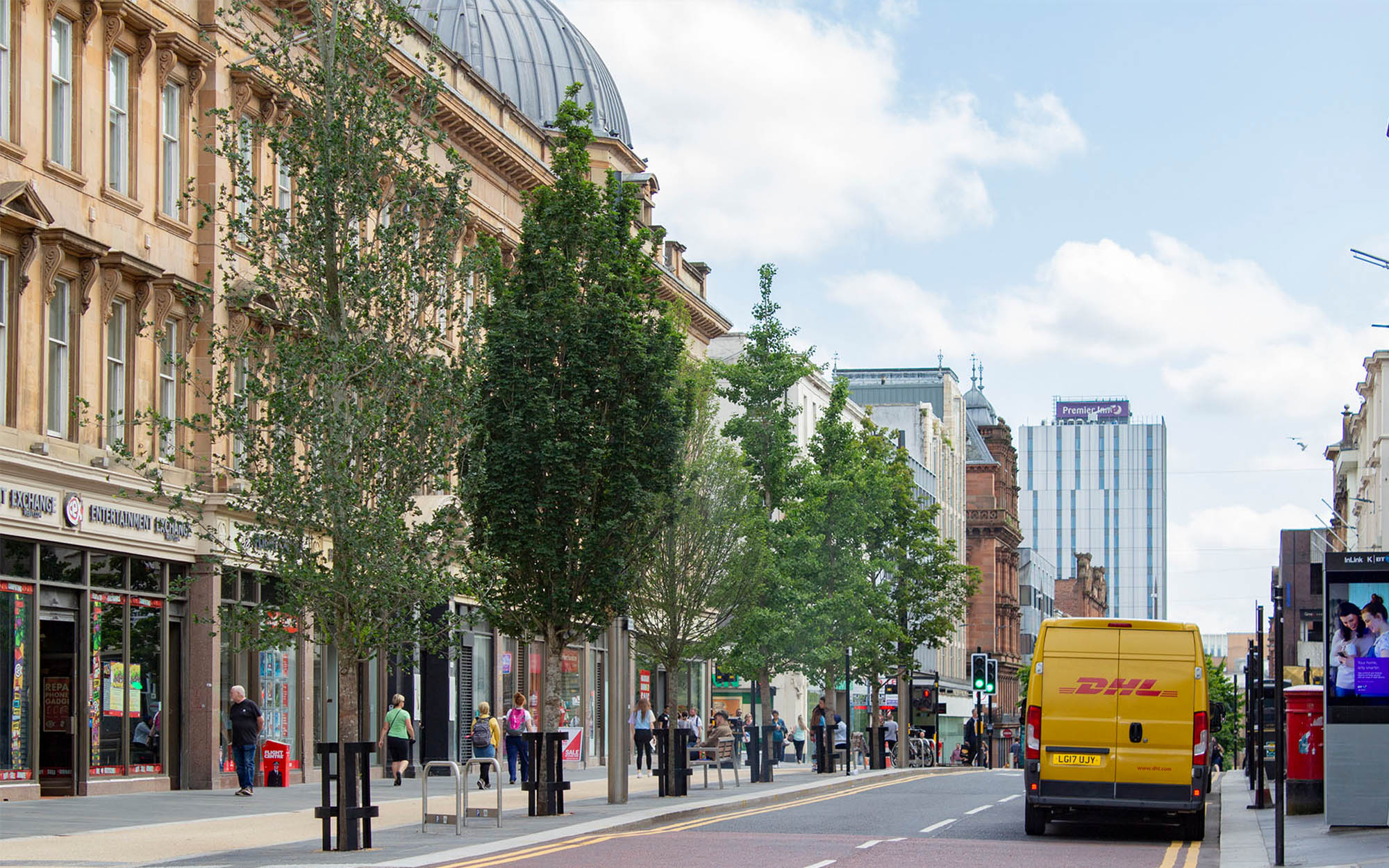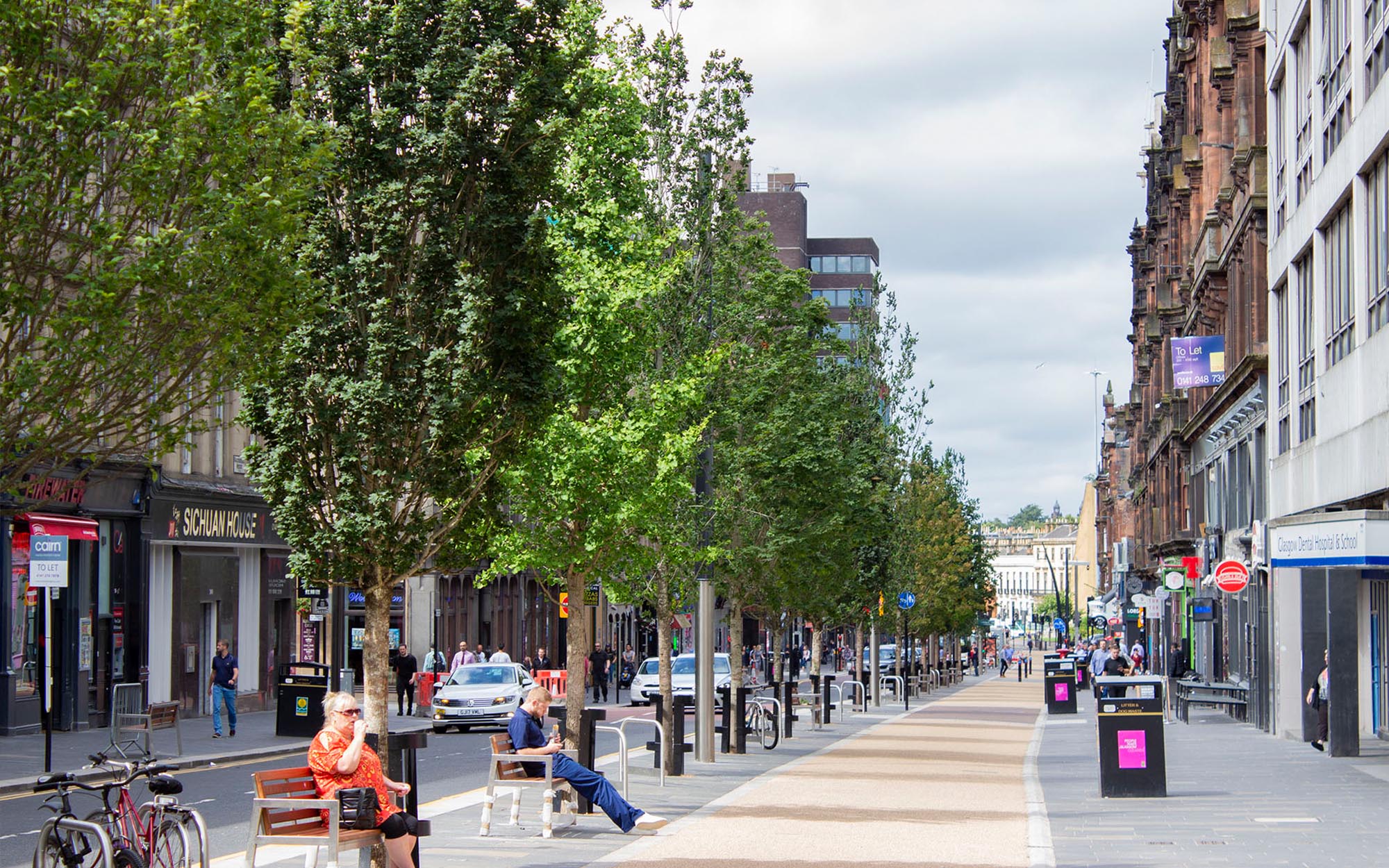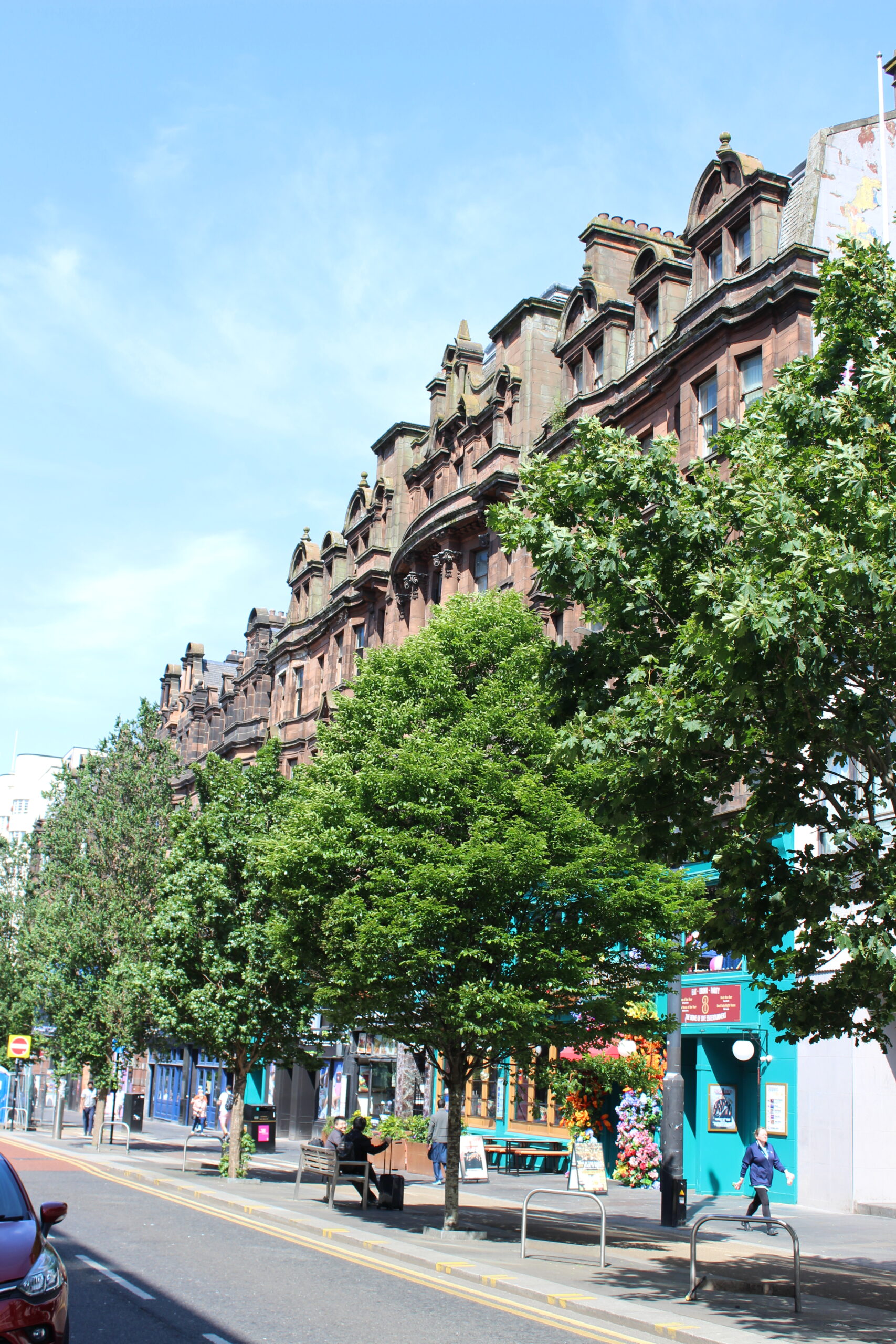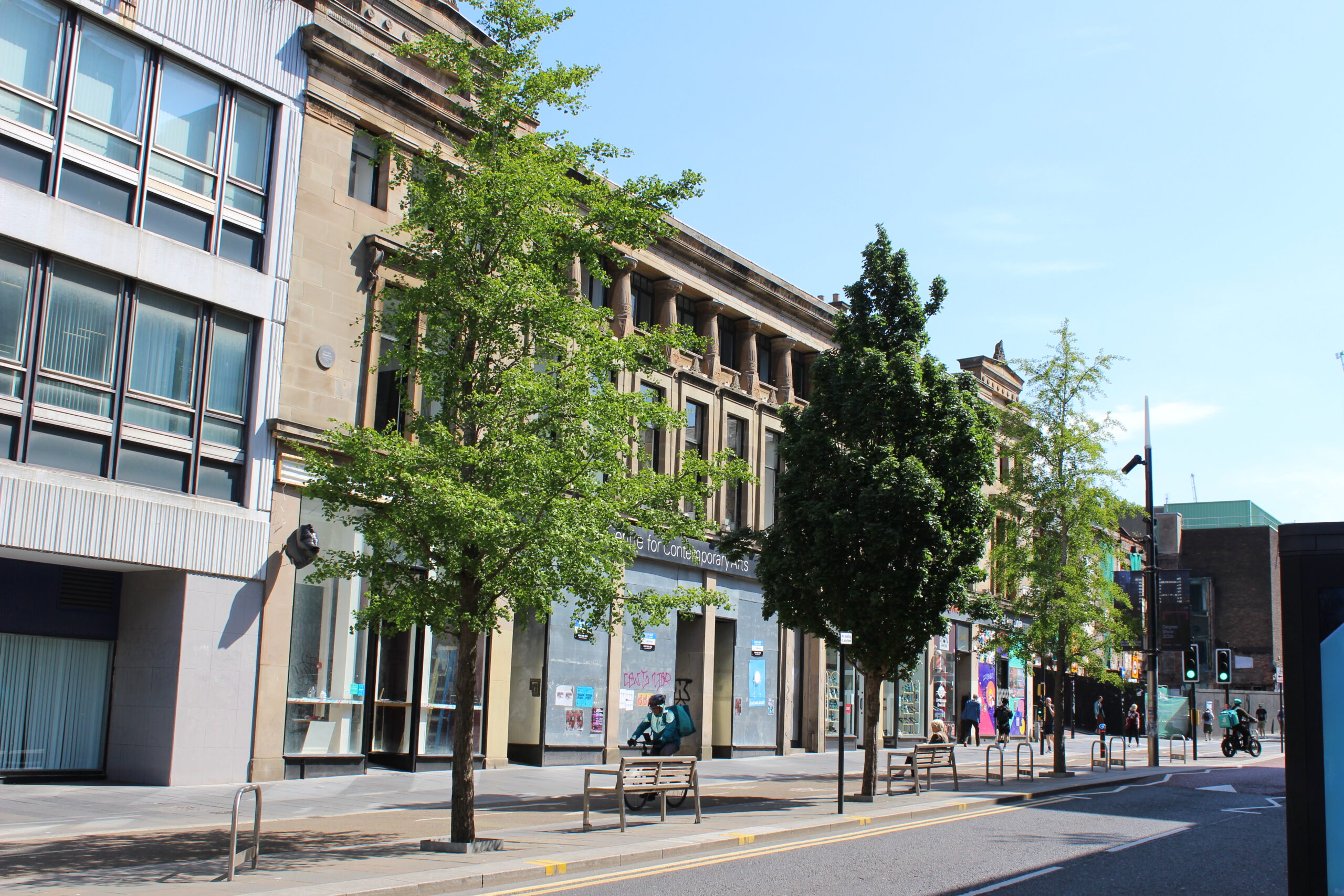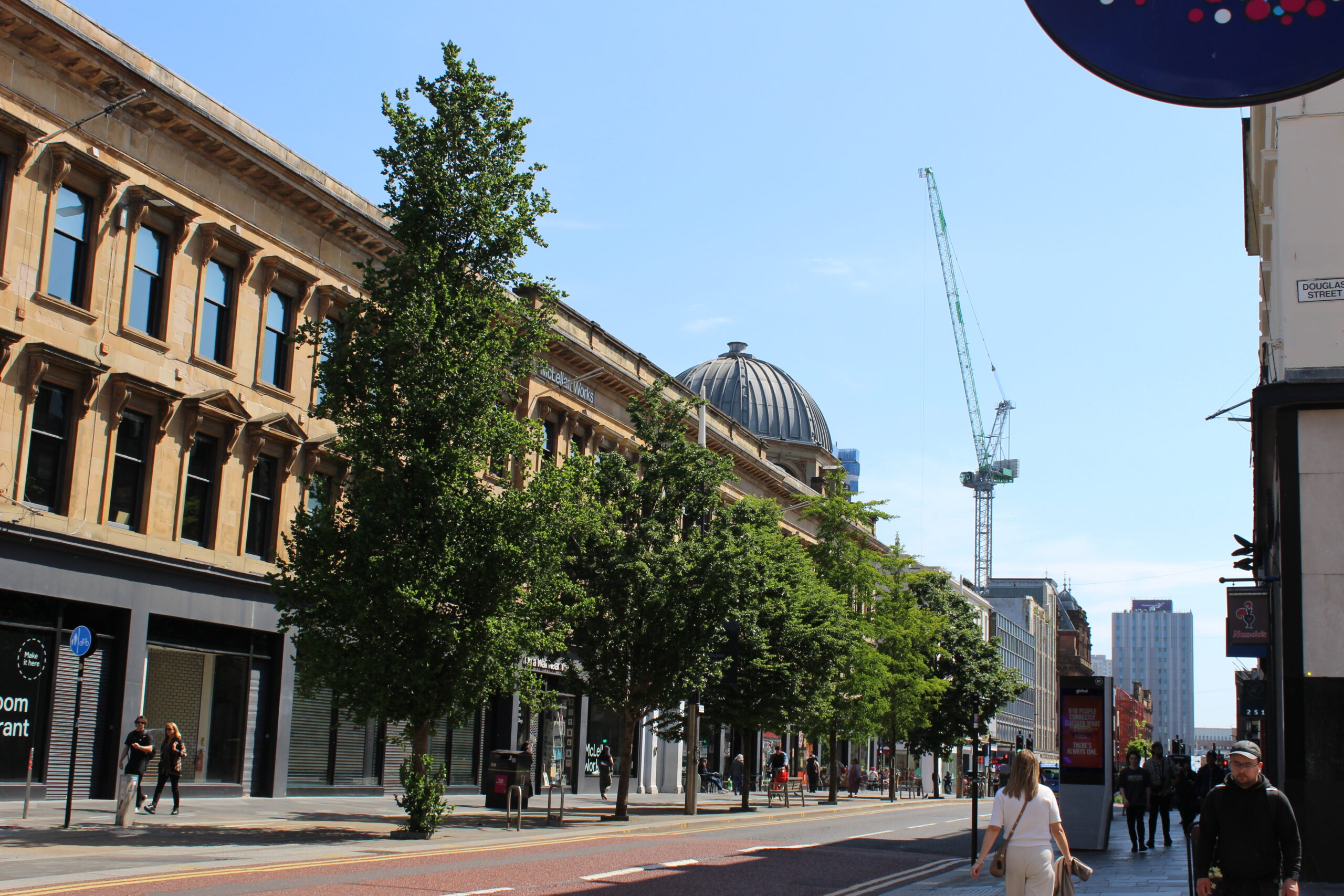
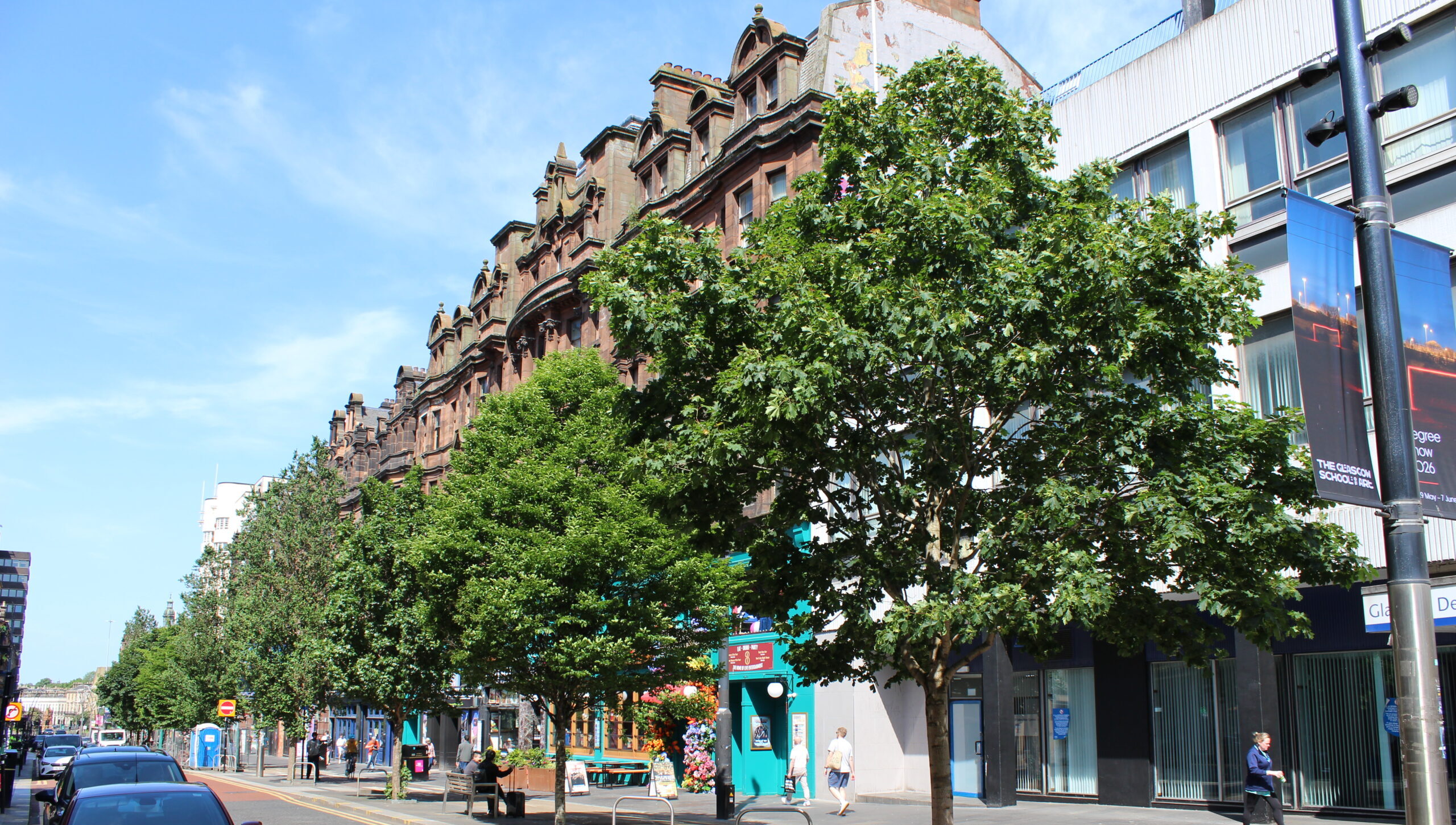
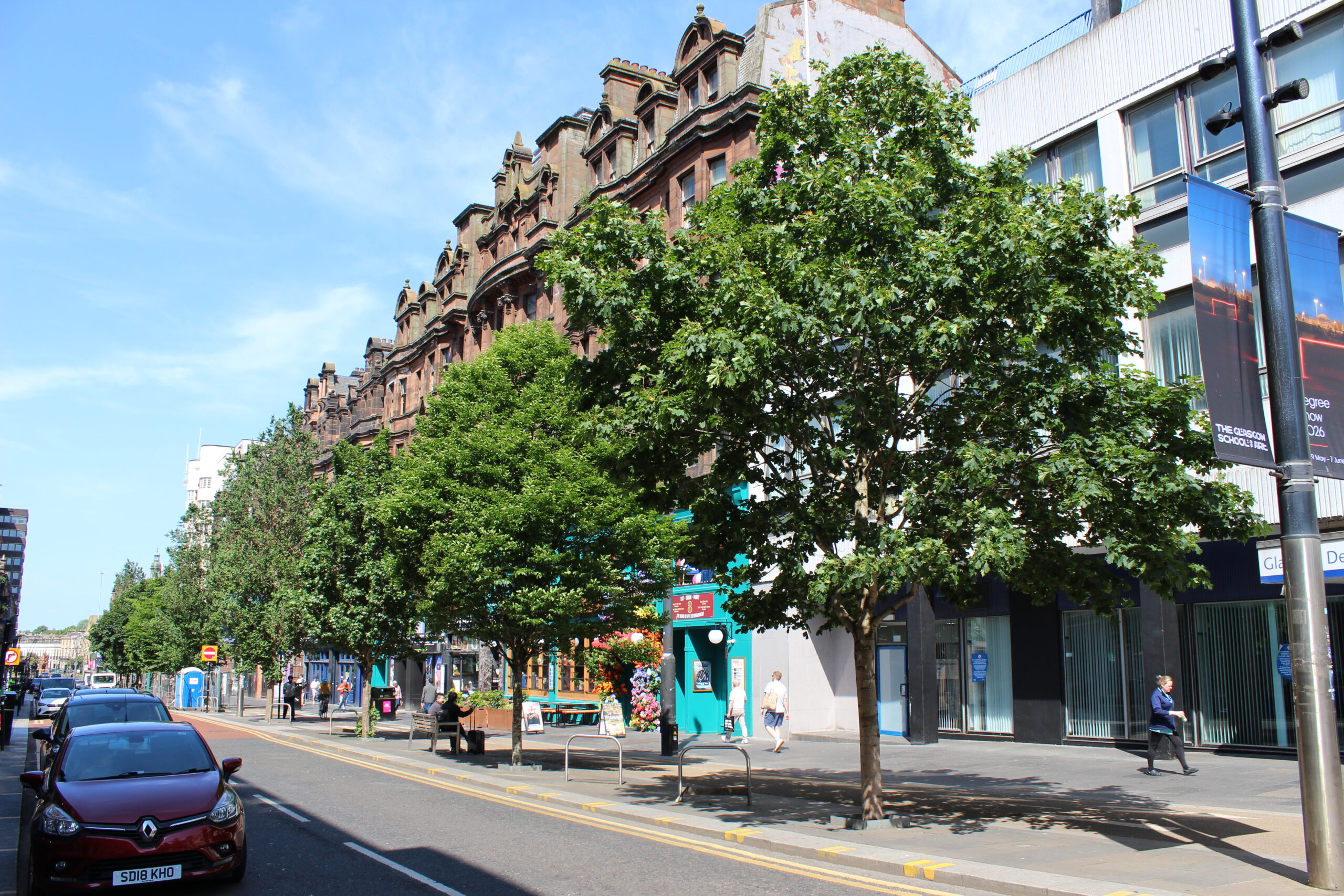
Sauchiehall Street has undergone one of the most significant public realm transformations in Glasgow’s city centre, turning what was once a vehicle-dominated corridor into a greener, more welcoming street for people, cycling and public transport. As the pilot project for Glasgow’s Avenues Programme, the scheme demonstrates how urban trees and sustainable drainage can be successfully integrated into one of the city’s busiest streets, despite the significant engineering challenges below ground.
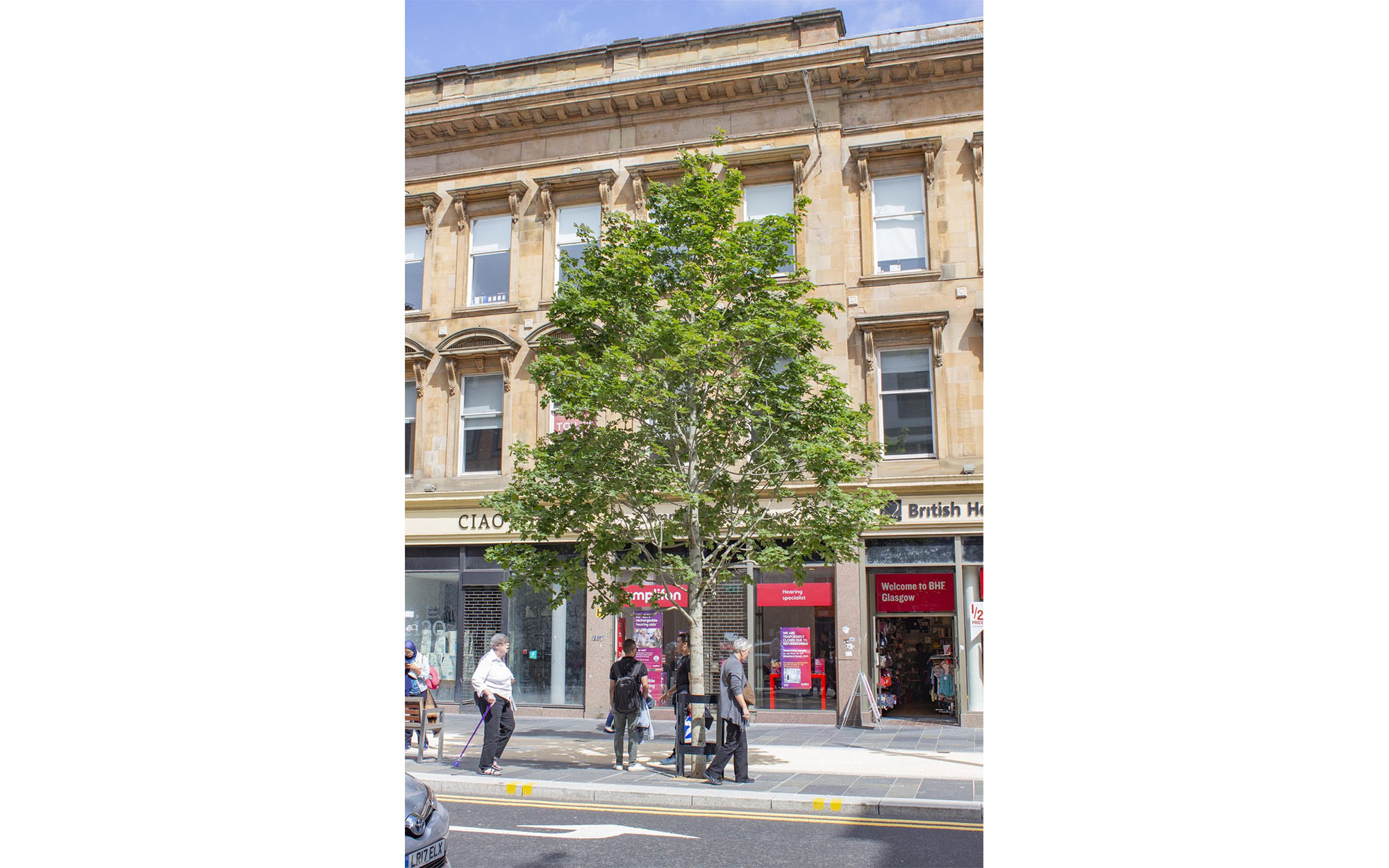
Phase 1 of the project, completed in 2019, delivered 28 new semi-mature trees within an established city centre required careful coordination between highways, utilities, landscape architects and contractors. Although the redesign created additional space by reducing the street from four traffic lanes to two, the project still had to work around existing underground infrastructure while providing sufficient rooting volume for long-term tree establishment.
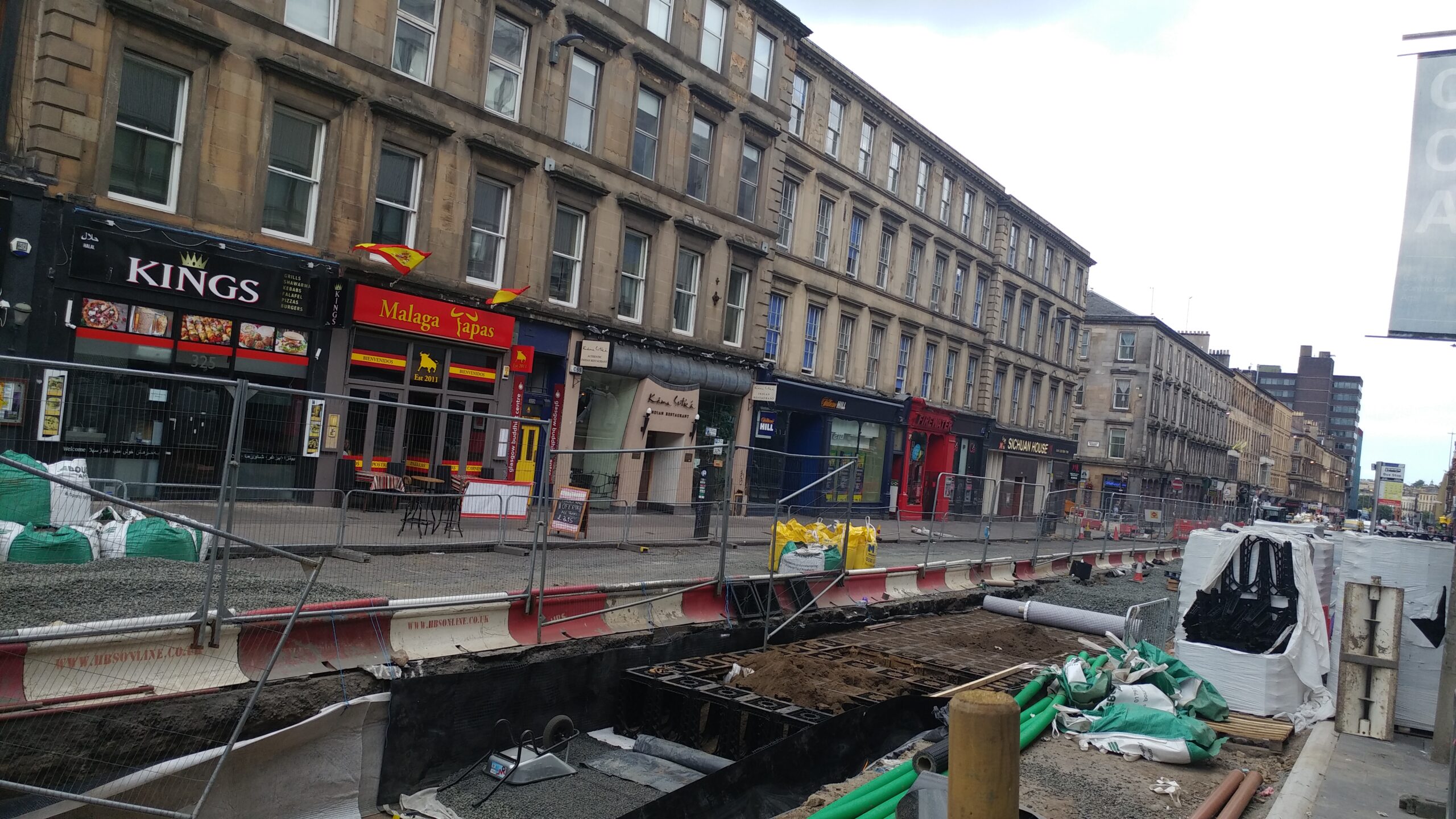
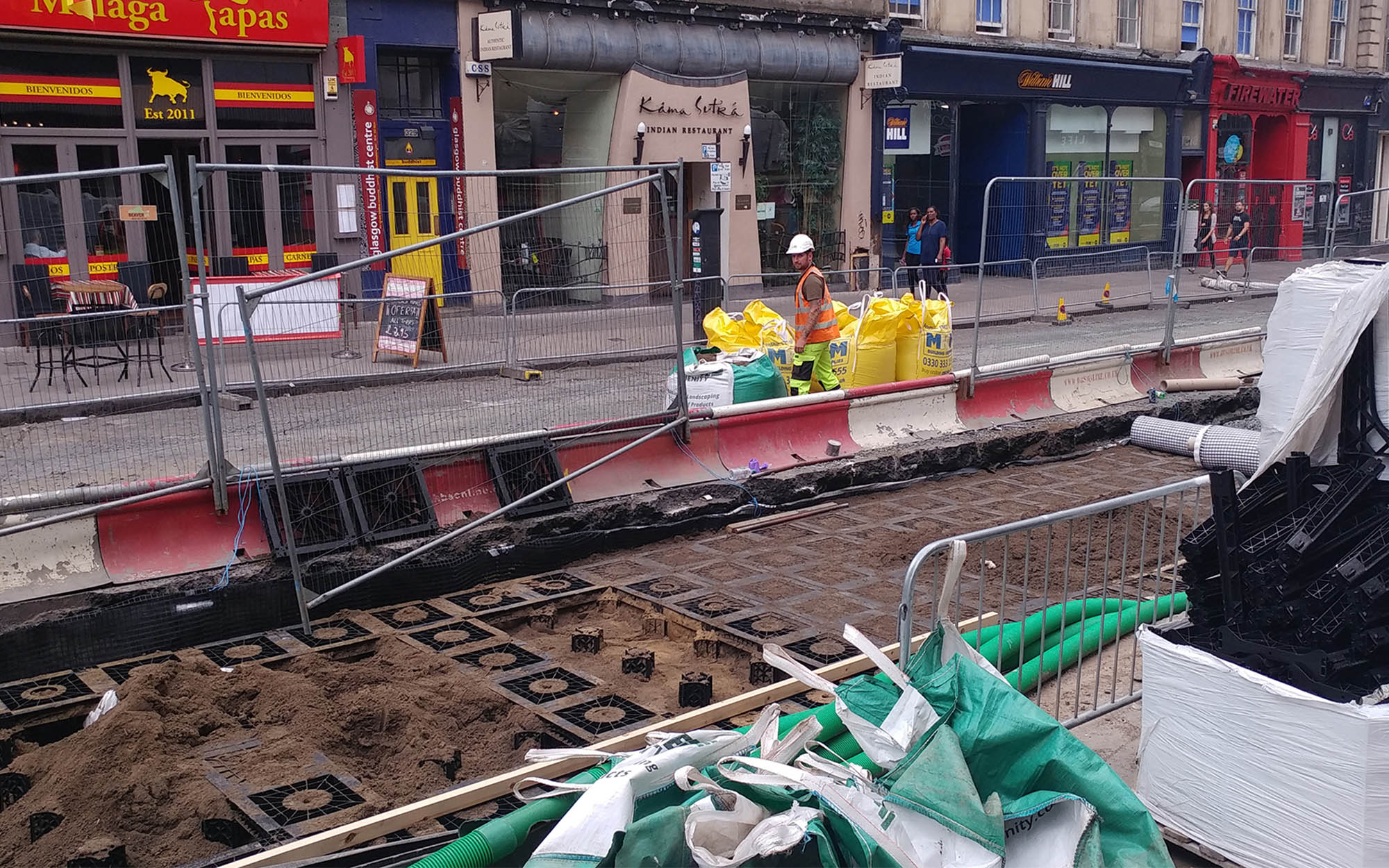
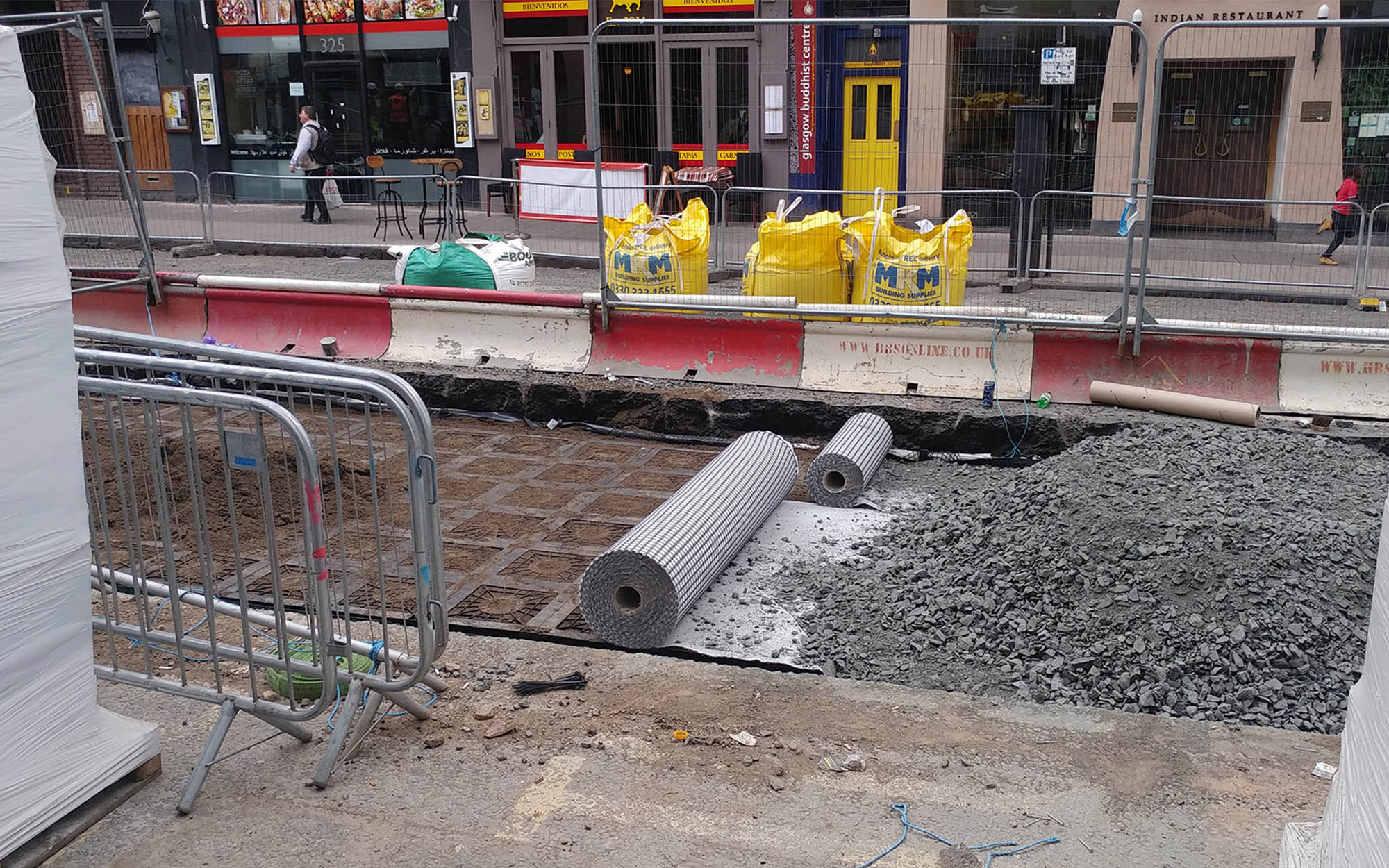
Early investigations identified the central verge as the most suitable location for the trees, helping to minimise conflicts with underground services. However, as construction progressed, previously unidentified communications infrastructure encased in concrete was uncovered, requiring further refinement to the below-ground design. The original proposal for deeper individual tree pits was revised in favour of a shallower, continuous soil cell system beneath groups of trees. This reduced excavation depths while still providing approximately 22m³ of high-quality rooting volume for each tree.
Working alongside idverde Ltd, GreenBlue Urban supplied the below-ground tree pit system that supports the paving above while creating uncompacted soil beneath the surface where roots can establish and thrive. Geotextile membranes were incorporated to protect the growing medium from surrounding materials, helping to create consistent conditions for healthy root development across the scheme.
During Phase 2 of the project, completed in 2025, integrated sustainable drainage into the pedestrianised section of Sauchiehall Street. Rainwater from surrounding hard surfaces is directed towards the tree pits, where it filters through the pavement construction into the soil below. The below-ground system temporarily stores water around the tree roots before discharging excess flows to the sewer network at a controlled rate, reducing pressure on traditional drainage infrastructure while supporting healthier tree growth.
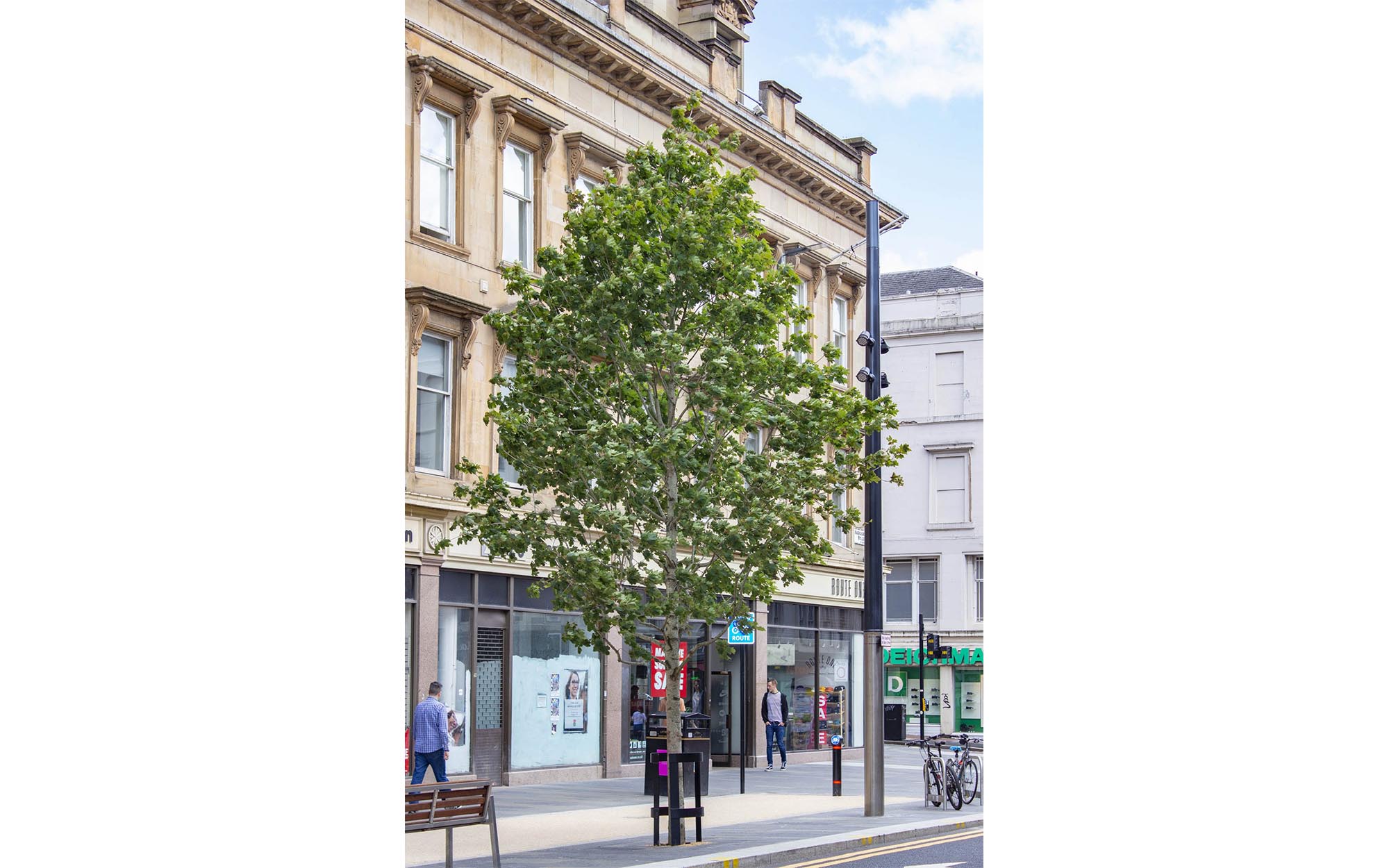
Rather than creating a uniform avenue of a single species, Glasgow City Council selected a diverse palette of trees to provide seasonal interest, resilience and long-term biodiversity benefits. The avenue includes Acer platanoides ‘Deborah’, Acer campestre ‘William Caldwell’, Ulmus ‘Columella’, Carpinus betulus ‘Fastigiata’ and Ginkgo biloba. Species selection considered factors including local climate, wind exposure, disease resistance, crown form and long-term suitability for the street environment.
The £6 million transformation has created a more attractive, people-focused streetscape while retaining vehicle access, public transport, loading areas and disabled parking. Wider pavements, dedicated cycle infrastructure, extensive tree planting and integrated SuDS now work together to create a greener, more resilient city street.
Sauchiehall Street demonstrates that successful urban greening is rarely just about planting trees. By carefully coordinating highways, utilities and below-ground infrastructure, the project has created the conditions for healthy long-term tree growth while delivering a public space that is better equipped to manage surface water, support biodiversity and improve the everyday experience of the city.