For the past several decades, it has become internationally recognized that the earth is unable to indefinitely support the type and extent of human activities that currently drive society. Sustainable development that ensures the healthy, lasting establishment of our local infrastructures mitigates this threat, and urban trees are essential to achieving and maintaining the sustainable environmental conditions in our cities. In this article, we discuss the importance of urban sustainability and examine approaches that landscape architects, urban planners, and other related professionals can consider when designing cities.
Sustainable development is referred to as “development that meets the needs of present society without compromising the ability of future generations to meet their own needs,” according to the World Commission on Environment and Development. It encompasses many aspects including city infrastructure, nature conservation, and much more.
Here at GreenBlue, we talk a lot about sustainable infrastructure because of it’s importance to sustainable development. Our definition of sustainable infrastructure is the design, building, and operating of urban infrastructure in a way that does not diminish the social, economic, and ecological processes required to maintain human equity, diversity, and the functionality of natural systems.
A mature urban tree is ten to twenty times more beneficial
to the environment than a mature rural forest tree (Akbari et al.)
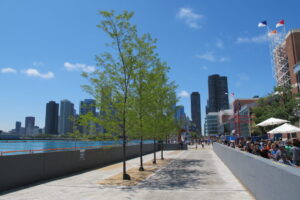
Mature urban trees make a huge contribution to sustainable cities, but most of the trees planted each year do not survive long enough to thrive and attain effective size. Numerous factors are involved in relation to tree longevity, but most importantly are planting methods. Too often street trees are planted in cramped tree pits with poor subsoil, resulting in deficient growth.
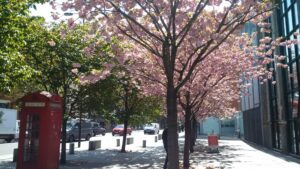
Another major concern in considering what makes cities sustainable in a social sense, is their desirability as livable communities. Few things can compare with the visual impact and seasonal interest that trees provide. They offer immense visual appeal to any area and will enhance the design of any streetscape.
Trees have enormous appeal not only aesthetically but also for their value as utilities. Trees cool urban areas and save energy used to air condition buildings. Hence they reduce atmospheric carbon and other related complications produced by burning fossil fuels to generate electricity.
In the 21st century, the world faces tremendous challenges, including economic crises, global warming, air pollution, poverty, poor health, and loss of biodiversity. For more than two decades, sustainable development has been advanced as a means of reconciling human development with the earth’s ecological systems.
The journey toward urban sustainability has become a key goal of public policy in North America and around the world. Local governments and other authorities are increasingly incorporating Environmental Impact Assessments (EIA’s) into development projects to hold developers more to account.
EIA’s can be undertaken for individual projects or for public plans, in order to ensure that plans likely to have significant effects on the environment are made subject to assessment prior to their approval or authorization. If the likely effects are unacceptable, design measures or other relevant mitigation procedures can be taken to reduce or avoid adverse effects.
Development that is unsustainable will eventually lead to negative environmental, social, and economic repercussions. Urban sustainability is about safeguarding the future and improving quality of life for individual countries and the global community.
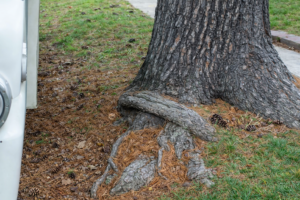
Urban trees exist in strenuous constraints with many factors that negatively effect them – such as soil compaction, insufficient irrigation and aeration, lack of root management, amongst other issues. Urban designers and other professionals must specify appropriate urban planting systems and techniques to assure survival and adequate tree growth, in order to maintain a quality landscape and minimize the impact of climate change.