Resilience is a current “buzzword”, particularly in relation to our urban spaces and infrastructure, but what does it mean? What defines resilience? Who defines resilience? And more importantly, what can every one of us do to encourage resilience?
The Oxford Dictionary defines resilience as:
“the capacity to recover quickly from difficulties; toughness” and “the ability of a substance or object to spring back into shape; elasticity”.
So what does that mean?
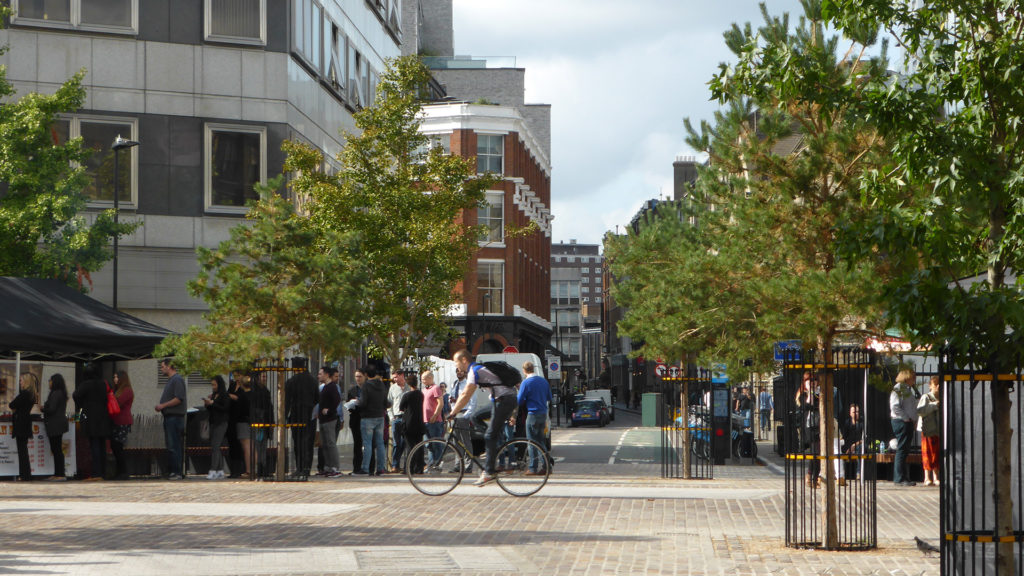
GreenBlue Urban believe that resilience as in urban resilience has to be designed at an early stage. Whilst some projects may be resilient “by mistake”, it is more successful if we all try to make sure that any changes that we make in our urban areas are designed with future changes in mind.
None of us has access to a crystal ball, but thankfully there has been huge progress in future forecasting for urban areas. Not only how we are going to use our public realm, but what the challenges are likely to be. Climate change is, of course, top of the list, but there are other potential issues that need consideration. Changing demographics, changing transport modes and even long term health problems mean that we have to try to plan ahead.
By 2050, estimates predict that 70% or more of the population will live in cities. 60% of new urban settlements are yet to be built!
The human race is remarkably resilient – over millennia we have adapted to changing circumstances and climates. Often these changes have been forced upon us, and adaptation is necessary for survival. With modern technology, we can predict some of the changes, but COVID-19 has shown us that we cannot fully guarantee what will happen in the future. The ability to understand the past, and plan for the future is unique to humanity, so we are responsible to harness this ability to provide for future generations.
So what does this have to do with GreenBlue Urban?
GreenBlue Urban has always promoted the dictum of “every tree should have the same opportunity to attain species potential longevity” Some of the most resilient cities in the world also have high canopy levels having successfully used the GreenBlue Arbosystem Tree Pit Systems – resilience and canopy cover seem to be closely correlated: Vancouver, Toronto and Boston are all in the top 12 of both. Therefore, it is vital that we understand that if we are to retain our critical canopy cover, we have to plant trees in such a way that they can attain maturity. Our ancestors used trees as shelter, fuel, medicine and many other uses; we don’t need trees for these uses now in the same way, but maybe we don’t realise what other benefits our urban canopy does for us.

Why are we talking about resilience?
There are many deserted cities and ghost towns across the world, abandoned for many reasons: economic downturns, natural or man-made disasters, wars or being by-passes as transport links. However, some towns have become uninhabitable due to climate change – removal of vegetation leading to extreme heat stress. Therefore if we are creating places where we can “bounce back better” from future urban challenges, we need to plant sustainably to help with urban resilience for future generations.
Our upcoming campaign “Resilient Places” will tackle the current economic, environmental and social threats that are how we can collaborate to help promote health, well-being and inclusivity for sustainable growth.