On your bike! 5-11 June is the 100th annual Bike Week marking a century of celebrating everyday cycling for everyone.
GreenBlue Urban office is located in the beautiful High Weald Area of Outstanding Natural Beauty known for its charming oast houses but lacking in 21st-century cycling infrastructure. This leaves cyclists to brave the winding and often narrow roads. Plus it is rather hilly!
Despite these challenges, GreenBlue Urban staff do swap cars for a bicycle. Here two of them share their stories and tips for a more healthy and enjoyable daily commute.
It takes less than half an hour to cycle to work for Shane Frost, GreenBlue Urban’s Head of Business Development. The route is on a straight and fast stretch of the road. Shane says: “
Cycling to and from work quite literally transforms the whole day. Time to reflect on life, opportunities and challenges and connect with nature whether rain or shine.
My three tips for those considering cycling to work are:
- Just make a start…. Pace yourself and enjoy the ride!
- Leave your computer and a spare change of clean clothes at work so you have less to carry on the journey.
- If you are traversing main roads ensure you have lights (even in the day) for safety.
Since the start of April, Kristina Sodomkova, a GreenBlue Urban consultant who is a member of a local cycling club, has clocked more than 100km cycling to work. Her journey combines a short cycle to a train station, a one-stop train journey, and a 20 minutes cycle through the countryside and the woods. She says:
Cycling in a rural area is surprisingly social. You end up speaking to people. A landowner whom you are asking for access where a route is seasonally not passable or a train station staff who waves hello as you leave the station.
My three tips for those thinking about cycling to work are:
1. Do it. The spring and summer seasons are so beautiful yet so short, make the most of them.
2. Buy a monthly train ticket. It forces you to use it and you end up cycling more.
3. Invest in cycling gear. My route is rather bumpy in places so having proper cycling shorts is critical to having a comfortable ride.
GreenBlue Urban office offers excellent shower facilities, supporting staff in cycling to work.
Why support staff cycling to work?
Staff who cycle to work are shown to be happier, and more productive, taking fewer sick days and staying longer in their roles
The numerous benefits of cycling are also recognised within the government’s 2020 strategy
The numerous health benefits aside, swapping a car for a bicycle can save
personal carbon dioxide (CO2) emissions.“Living car-free is the single biggest choice you can make to reduce your carbon footprint, saving over 2 tons of CO2 per year, according to research quoted by Sustrans the charity making it easier for people to walk and cycle.
Active travel case studies
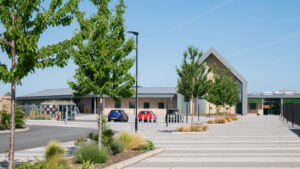
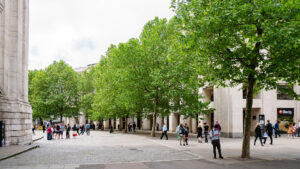
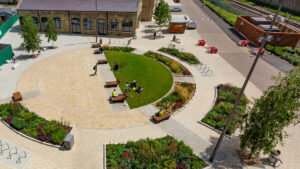
A recent blog on the new Active Travel Assessment GreenBlue Urban highlighted projects with its blue-green infrastructure solutions that were used for the creation of green and leafy tree-lined cycle and walking routes to support people taking up walking and cycling. These included:-
Leonard Circus – Shared Space
Walthamstow High Street, London
Wapping Wharf, Bristol
Sauchiehall Street, Glasgow
The government has set a target of 50% of all journeys in towns and cities to be made by active travel modes by 2030.
In summary, active travel modes include health benefits from exercise, better air quality from replacing car journeys with walking or cycling and economic benefits from relieved congestion and improved public health.
Green active travel routes, create attractive, safe, and healthy environments for all.