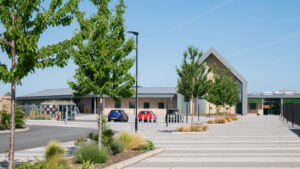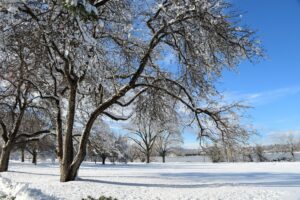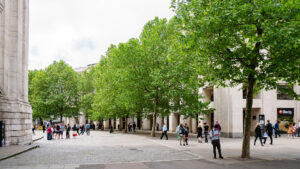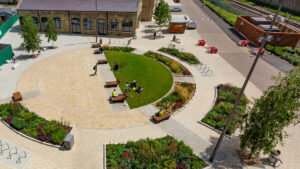
With urban tree populations around the world on the decline, the Forestry Commission has recently produced their vision for a resilient urban forest in view of reversing the steady decline in urban canopy cover. The document, that will be circulated around local authorities and housing developers, seeks to clarify the concept of an urban forest, the term is a complex and nuanced one.
One of the main strengths of the document is that it highlights five distinct benefits associated with valuing our urban forest: climate change, bio-diversity, resilience, economic growth and health and well being. One of the challenges faced when defining and improving our existing urban forests is the fragmentary nature of existing GI data across the UK. How can we develop a vision of something whose scope is? The concept of the bio-phonic city needs to be rolled out across the UK and the ecosystems services provided by a resilient urban forest made clearer to citizens in UK towns and cities. The role-played by urban trees as part of stormwater management and pollution reduction needs to be further embedded into the philosophy of those forming policy at central government level. The term ‘Urban Forest’ may facilitate a variety of stakeholders to conceptualize the symbiosis between our natural and built environments.
Whilst we know that good work is already being done across the UK to value our green infrastructure and capitalize on the data that does exist with the resources already available, it is clear that we have some ways to go. With clear support from Rory Stewart, MP, OBE, this document has the potential to unite and inspire community groups, local authorities and developers to take the expansion of our urban forests seriously.
In this post Brexit environment, we need to convince local authorities, central government and developers to value and invest in the UKs urban forest. The planning system is key in the implementation and delivery of this vision. There is a clear aspiration that developers and planning authorities will work together to embed the concept of the urban forest into the entire planning framework. However, from bitter experience this is no easy task. Lack of resources at local level and pressure on housing supply means the urban forest is low down on the priority list. No site is too insignificant and we desperately need to promote an urban forest vision if we are to set and maintain ambitious canopy cover targets, create green streets and make each of our urban areas a livable built environment. The time is upon us to rise up and face the challenges before us.