Tree planting is a crucial aspect of urban development, offering numerous environmental, aesthetic, and health benefits. However, the success of tree-planting initiatives heavily depends on the choice of planting media. In this blog, we will delve into various tree planting systems, including soil cells, gravel-based structural soil, and sand-based structural soil, comparing their features, advantages, and environmental considerations.
Soil Cells:
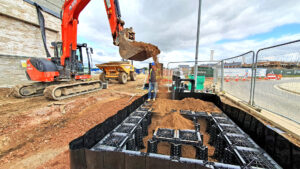
Soil cells are load-bearing soil support systems designed to prevent soil compaction while providing ample rooting space for trees. RootSpace Airform, a market leader manufactured entirely in the U.S. and Canada, offers 97% root-accessible volume, making it ideal for large-volume tree pits. Additionally, it can be used in paved and vehicular trafficked areas with minimal surface coverage. Soil cells, such as RootSpace Airform, can also serve as stormwater treatment systems, storing rainwater, filtering pollutants and nourishing trees. The patented airflow lid ensures proper soil aeration, promoting tree health. RootSpace Airform’s use of North America-sourced recycled materials and unique lattice structure highlights its high strength and environmental sustainability.
Gravel-based Structural Soil:
Gravel-based structural soil, developed in Europe, utilizes aggregate stone as a structural component to support paved surfaces, with soil-filled gaps for root growth. However, the usable soil fraction is limited to approximately 20% of the total volume, necessitating larger tree pits compared to soil cell systems. Installation can be time-consuming, requiring on-site mixing and additional considerations such as biochar supplementation. Environmental concerns arise from the extraction of suitable stone and freight movement, impacting the product’s carbon footprint.
Sand-based Structural Soil:
Originally popular but now declining in use, sand-based structural soil consists of a sand-based mix with traces of composted green waste. Installed in layers and compacted, it must strike a delicate balance to avoid impeding root growth or causing pavement deformation. Challenges such as low nutrient levels and loss of tree health and vigor have contributed to its decreased popularity.
While soil cell systems offer significant advantages for urban tree planting, it’s essential to compare various options available in the market. Some soil cell systems utilize column-based structures, which differ from the lattice design of RootSpace Airform. These column-based systems often use virgin-sourced materials and may claim comparable functionality to lattice structures. However, concerns arise regarding lateral loading and root-accessible volume. Unlike the interlocking lattice structure of RootSpace Airform, column-based systems may not provide optimal rooting space, limiting the long-term health and stability of trees. Additionally, the sourcing of virgin materials and overseas manufacturing can impact environmental sustainability and product availability. When considering soil cell systems, it’s crucial to prioritize root-accessible volume, load-bearing capacity, and environmental credentials to ensure the successful establishment and growth of urban trees.
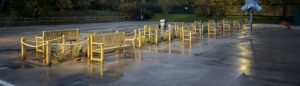
While from our UK office, this recent podcast episode is applicable worldwide. Our colleague Howard engaged in an insightful conversation with Mark Syrett, formerly associated with Brighton City Council. Mark spearheaded a tree planting trial at Stoneham Park in Hove, involving the installation of various tree-planting media. In discussing growth, maintenance, and installation, he emphasized trees are growing quicker in RootSpace Airform cells simply with more soil and water, outperforming those in structural compacted environments. He noted that RootSpace Airform significantly outperformed other options in terms of installation too, re-affirming our frequented phrase “Right Tree, Right Place, Right Way” for the successful establishment of trees.
In conclusion, selecting the appropriate tree-planting media is essential for ensuring the long-term health and vitality of urban trees. While each system offers unique features and benefits, soil cells like RootSpace Airform stand out for their superior root-accessible volume, load-bearing capacity, stormwater management capabilities, and environmental sustainability. As urban landscapes continue to evolve, innovative solutions such as these will play a vital role in fostering green, resilient cities for generations to come.