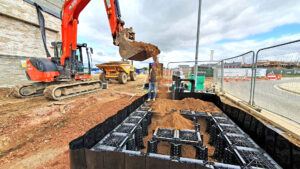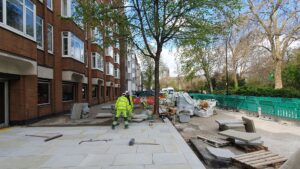
Unfortunately, the maintenance-free tree has yet to be discovered. However, the correct species choice and an intelligent inspection regime can reduce long term liabilities massively. In this blog we discuss the needs of trees, and what happens if maintenance is skimped on.
Once planted, the first couple of years of support and care are critical if the tree is to become independent in the landscape. Many urban trees that fail in the first few years simply die because of a lack of water! Some cynical developers believe that it is cheaper to replace trees every few years rather than irrigate them until they are fully established. It is also important to protect establishing trees from physical harm if they are in vulnerable positions using grilles/grates and guards as young trees are susceptible to vehicle damage, strimmer damage and malicious vandalism.
So apart from watering, what else does a tree need? Realistically, very little; annual visual inspections and selective pruning if necessary. A healthy tree in sufficient uncompacted soil volume largely looks after itself once it has become established, finding water and nutrient without causing any problems to surrounding surfaces or below ground utility runs. However, if the available rooting volume is insufficient, the tree will usually seek out alternative sources of nutrient and water and invariably this will conflict with infrastructure. Any tree ties should be checked annually and released as soon as the tree has established a rooting pattern, and certainly before the tie begins to damage the bark of the tree. Checks for pest and disease are increasingly important with the spread of infestations globally, and treatment may be needed if any evidence is found.
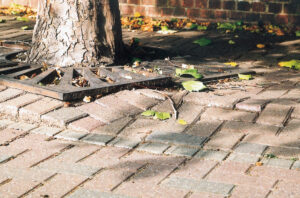
Once the tree gets larger, the canopy may need reduction to avoid problems with light reduction for neighbouring properties or even to avoid canopy strikes by passing vehicles. This can be done on an annual basis or a rolling 5-year programme; often trees are pollarded or pleached, but these interventions can be labour intensive and most local authorities avoid these long term commitments. Along with canopy checks, any tree protection such as grilles/grates and guards need to be inspected to ensure that they are still required and are not causing damage to the tree. If the protection is redundant or about to come into contact with the tree, it should be removed immediately. Most local authorities levy a fee to adopt trees in a highway called a commuted sum which is calculated to cover the cost of maintaining the tree for a period of time – 25 or 50 years is typical. These fees vary from local authority to local authority and can run to thousands of pounds. Research currently shows that a healthy tree in an urban area costs only approximately £15 per year to maintain, but it is regular replanting costs which bumps the costs up massively.
Too often we become tree blind; because it isn’t causing us any immediate trouble, we forget about it. Then too late we notice that it is pushing the kerb over, breaking pavement surfaces or becoming strangled by the grille/grate or guard. A proactive inspection programme saves expensive emergency works and helps keep our vital urban tree canopy cover complete for future generations.