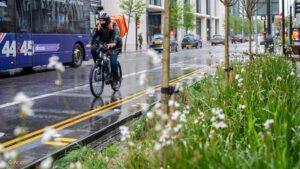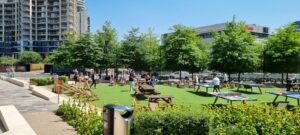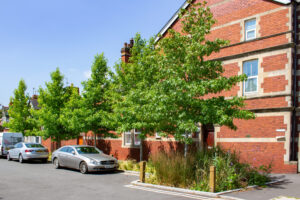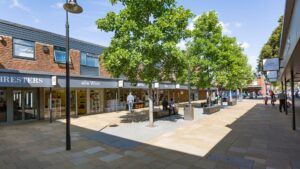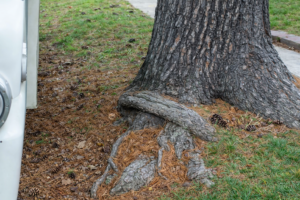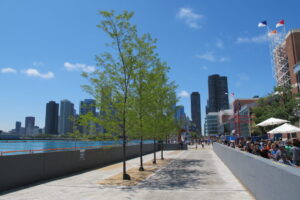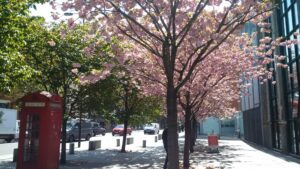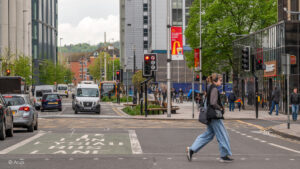
As soon as tree planting is proposed in our congested urban areas, the full plethora of challenges quickly become obvious. When planning urban tree planting, an understanding of the constraints that urban areas present are critical if long term canopy cover is going to be possible.
Our most recent webinar challenged the urban planting myths with a host of speakers that have successfully planned and installed urban trees for a long term legacy.
Encompassing Right Tree, Right Place, Right Way.
As industry professionals, we aim to think strategically about what we are leaving behind for future generations. Often the demand for many smaller trees in a scheme is not always essential, planting larger trees and maximising our canopy cover is far more effective for climate change mitigation.
St Pauls Cathedral is a prime example of large healthy trees creating a legacy impact. Planted over 15 years ago using GreenBlue’s original soil cell RootCell and high-quality soil medium, these trees have flourished with ideal rooting volumes.
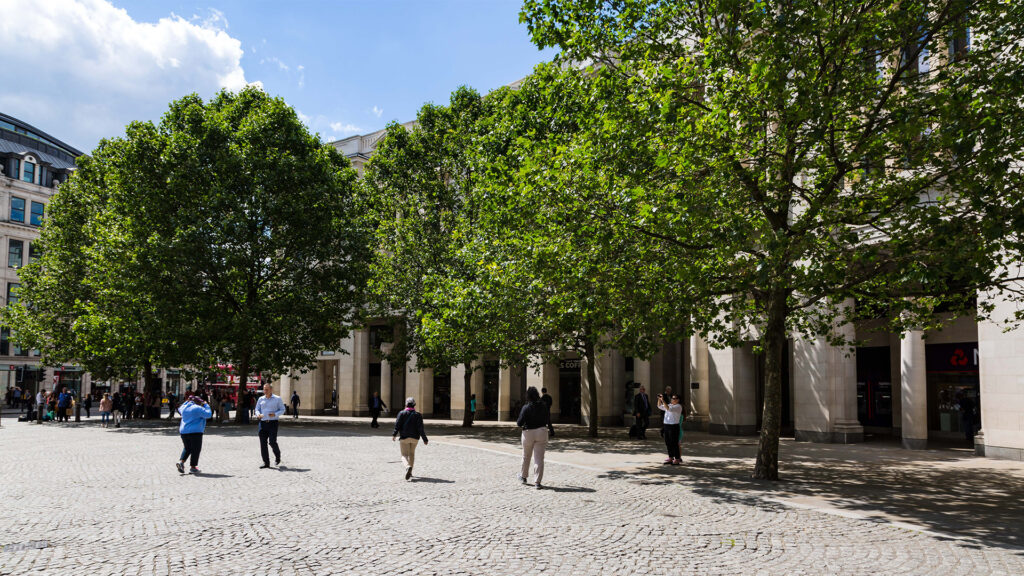
“Too often we get Quantity at the expense of Quality. If we are going to leave a legacy, we have to invest upfront.” Howard Gray, GreenBlue Urban.
Looking ahead trees are becoming active parts of our infrastructure, and the inclusion of SuDS features provides multi-functional use. Pete Stringer, City of Trees has set a goal for the community forest to plant 3million trees, one for every person living and working across Greater Manchester. Pete often encompasses how trees co-exist with utilities and services busting myths on underground constraints.
Pete was able to demonstrate a hybrid tree pit to include GBU’s RootSpace and StrataCell systems on a recent scheme at Hilton Street. Working around several main utility pipes the tree pit was able to be adapted to the site creating a positive aesthetic green outlook that would otherwise have been grey.
Many utility companies now accept that trees do not always damage their property, but fear public opinion if a tree must be removed for utility upgrades.
Nothing is impossible with underground constraints.
“Hilton Street contained a hybrid system of both GreenBlue’s RootSpace & StrataCell, maximising room for existing services recreating a natural forest floor in a urban street setting with quality soil’. Pete Stringer, City of Trees.
The latter section of the webinar introduces Kate Sparrow, Forest Research. Kate is passionate about increasing our canopy cover across the UK but understands the common cryptic question by many is: What is next?
Canopy Cover WebMap assesses the ‘area of ground covered by leaves and branches’ usually expressed in a percentage. It is a vital tool to identify the increase of our urban forests and is incorporated into numerous tree strategies and policies across the UK such as Scotland’s forestry strategy (2019).
The I-Tree tool is an accomplished tool, monitoring the growth of trees across the UK. The concept of the I-Tree tool is a citizens science project, canopy cover assessments are completed by volunteers and the data is sent to Forest Research to upload. At present, a celebrated 66% of all urban wards have completed the I-Tree tool, and the information can be identified on the canopy cover webmap, available for local authorities to be able to use.
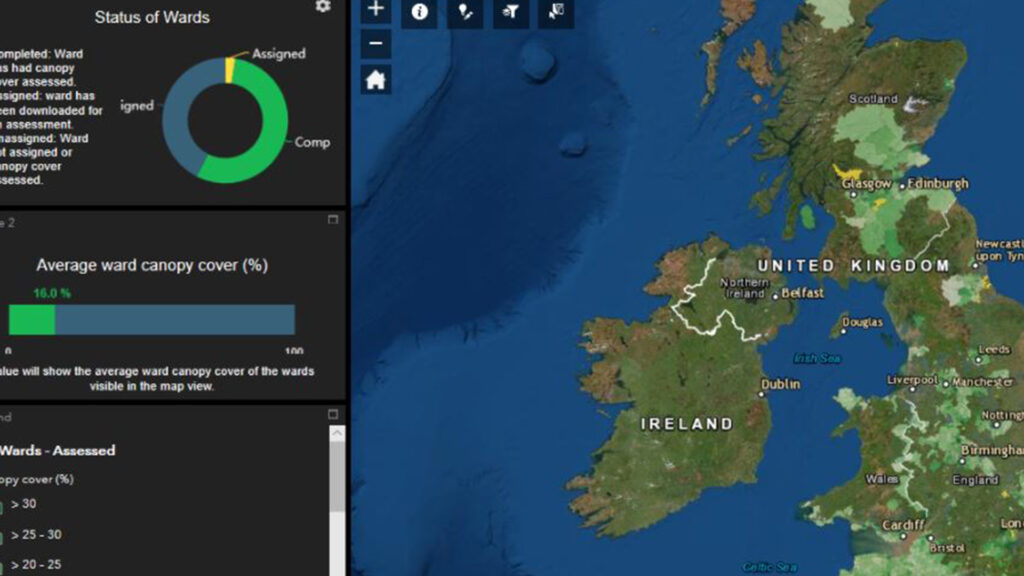
“Legacy is sustainability and building resilience for future generations to enjoy and benefit from our urban forests, basing our understanding on the barriers, challenges and prioritising the benefits” Kate Sparrow, Forest Research
Finally, our webinar audience was educated on new development within Portsmouth by Natascha McIntyre-Hall, Portsmouth City Council. The proposed scheme named, Lennox Point sits on a reclaimed peninsula, set to be a vibrant ‘Car-Free, Care-Free Living’ scheme, designed for sensory engagement and placemaking. Working with the brilliant engineers -WSP, Portsmouth has created living and working opportunities in an environment that grows with the community of which the public can be a part. As Portsmouth is the only island city, the connection with water is huge, therefore all elements of water and green infrastructure being combined have been addressed.
The schemes ethos from the outset was transparent and clear, ‘improving the lives of our community by creating an intimate environment by eliminating cars’. This live-work solution on such an important piece of land is evidently set to become a legacy scheme through the planning for maturity and the people.
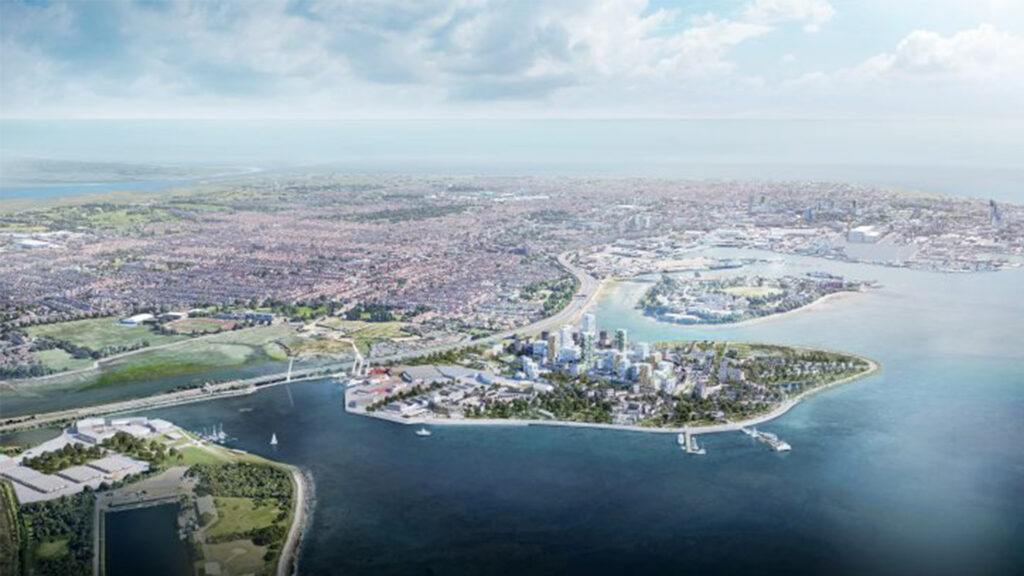
“Create a scheme that is a long-lasting legacy that will outlive us all”. Natascha McIntyre-Hall, Portsmouth City Council
In conclusion, GreenBlue is an advocate for the planning, design and installation of long-term tree canopy – no matter what the liability – they can be overcome. Talk to our team we have seen many different scenarios and will have a recommendation.
We look forward to seeing your legacy schemes at the planning stage and implemented into our new developments and streetscapes for future generations to enjoy.
The recording of the webinar is available on our website HERE.