There is a conversation that seems to be happening more and more often this summer: does the UK need to start preparing for a hotter climate?
The familiar idea of British summers being mild, wet and unreliable feels increasingly out of date. After a very wet winter, this year has brought repeated heatwaves, prolonged dry weather and drought conditions across parts of the UK.
At Wisley in Surrey, 62 consecutive dry days were recorded before rain returned in August, more than two months without measurable rainfall. July was also exceptionally dry across southern parts of the UK, with drought conditions declared across Wales by the end of the month.
These conditions raise an important question: is our infrastructure ready for the climate we are increasingly experiencing?
Built for a Different Climate
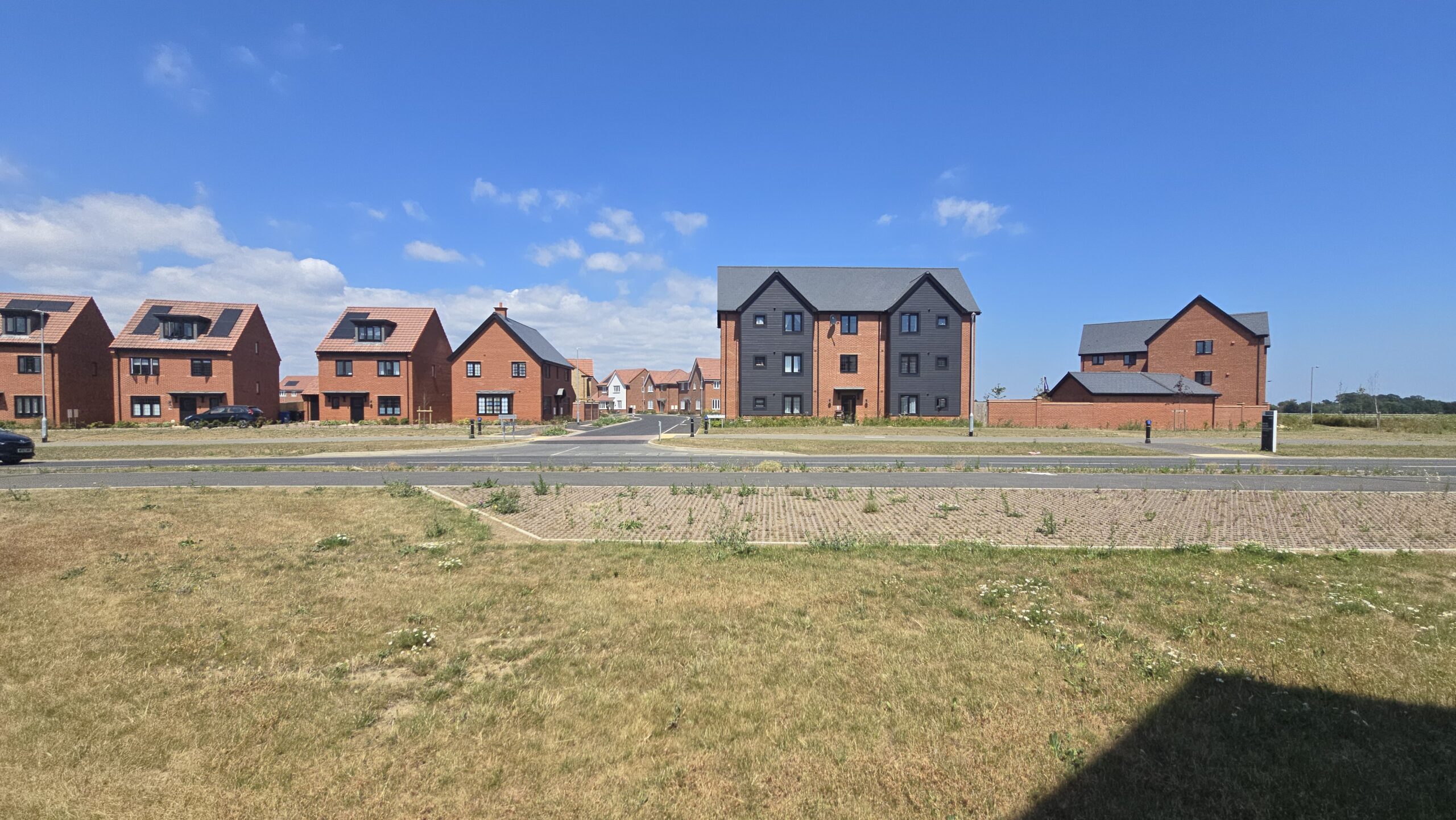
Much of the UK’s housing, transport infrastructure and public realm was designed around a relatively mild climate. Buildings have traditionally been designed with retaining heat as a priority, but keeping homes, workplaces and public spaces comfortable during prolonged periods of high temperatures is becoming increasingly important.
Air conditioning will undoubtedly have a role to play, particularly in buildings where passive cooling measures are limited. However, widespread reliance on mechanical cooling would also increase energy demand, making it important to consider how our built environment can provide more cooling through its design.
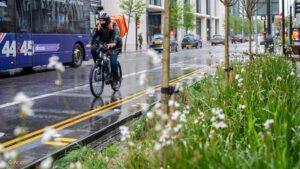
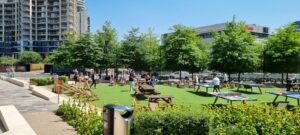
Trees, vegetation, external shading and well-designed public spaces can all contribute. Mature tree canopy can shade streets, buildings and people from direct solar radiation, while vegetation provides additional cooling through evapotranspiration.
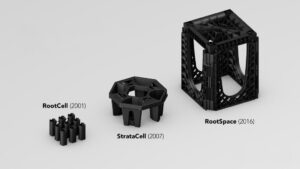
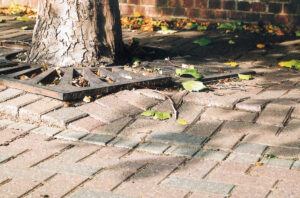
As periods of high temperatures become more common, shade and cooling need greater consideration within the design of our towns and cities. This also places greater importance on providing urban trees with the soil volume, water and rooting conditions required to establish, mature and develop meaningful canopy.
Then the Rain Returns
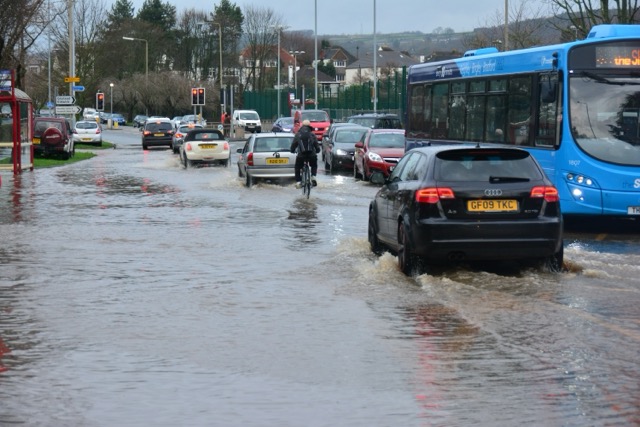
After weeks of dry weather, rainfall is welcome, but prolonged dry conditions can affect how quickly the ground is able to absorb intense rainfall. Where water cannot infiltrate quickly enough,
greater volumes can move across hard surfaces, increasing the potential for localised surface water flooding.
This means drought conditions and flood risk can occur within a relatively short period of one another.
It also highlights the importance of considering how rainfall is managed across our built environment.
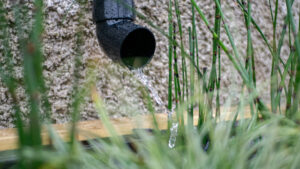
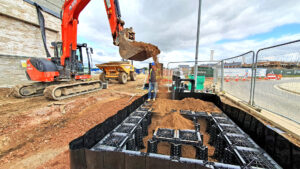
For decades, conventional drainage has focused on moving water away from where it falls. Increasingly, there is an opportunity to manage more of that rainfall locally: slowing flows, storing water temporarily, encouraging infiltration where ground conditions allow, supporting trees and vegetation, and reducing the volume of water reaching drainage networks during the peak of a storm.
Managing Water Locally
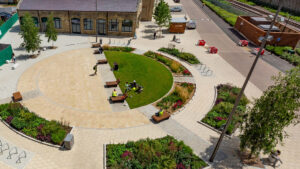
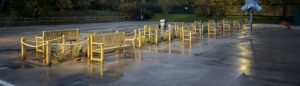
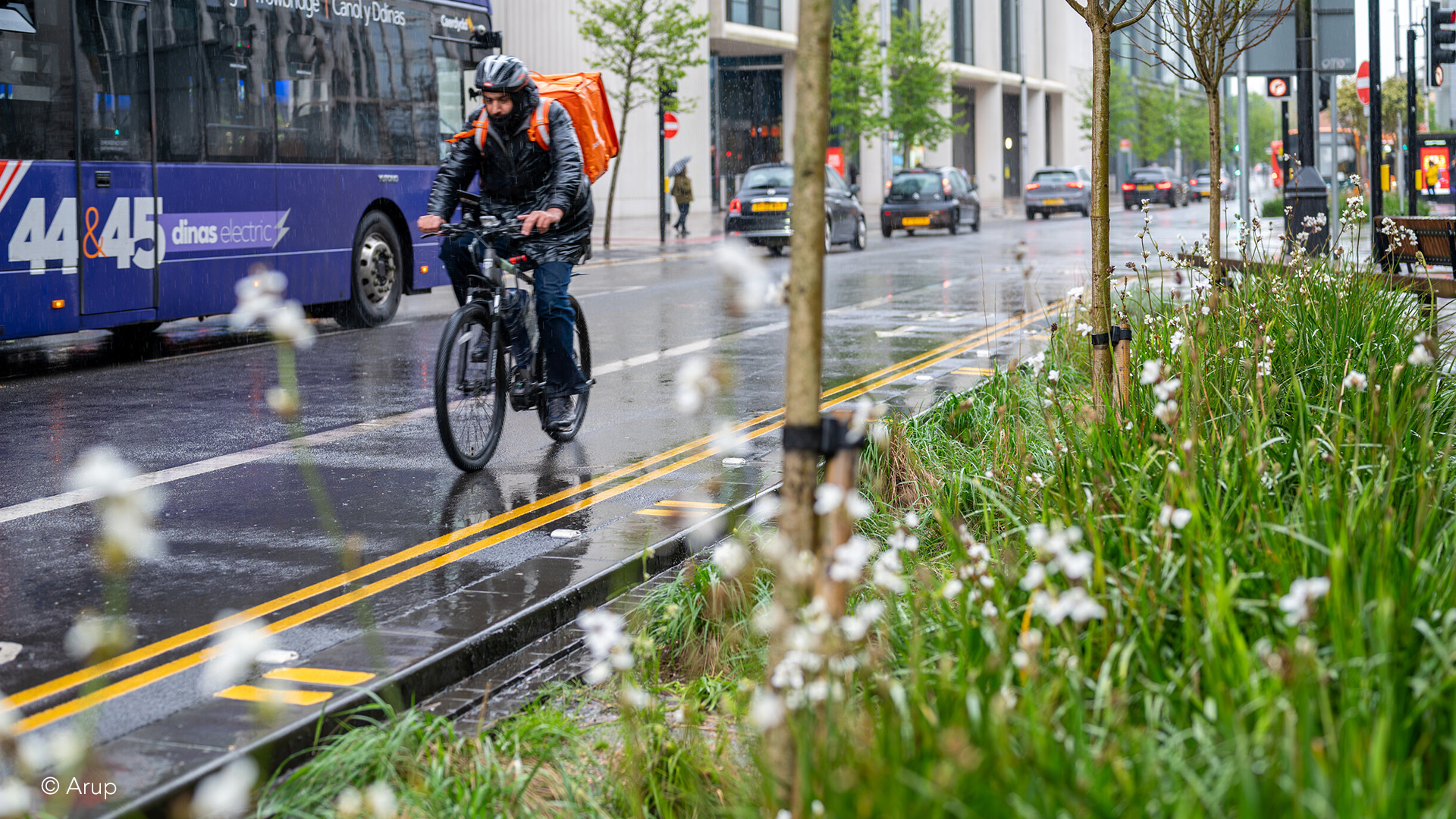
Sustainable Drainage Systems and wider blue-green infrastructure provide practical ways to manage rainfall within the landscape. Rain gardens, SuDS planters, SuDS tree pits, permeable surfaces and other nature-based interventions can intercept water close to where it falls, slowing runoff and helping to reduce pressure further downstream.
These systems can also support vegetation through increasingly hot and dry periods. Urban trees provide valuable shade and cooling, but their long-term performance depends on access to sufficient soil, water and oxygen.
Rainfall management, drought resilience and urban cooling are therefore closely connected. Designing these elements together creates opportunities to use water more effectively while also helping towns and cities adapt to higher temperatures.
Designing for More Than One Extreme
The challenge facing the UK is preparing infrastructure for greater variability and more extreme weather. A street may experience prolonged heat and drought before having to manage intense rainfall within a matter of days.
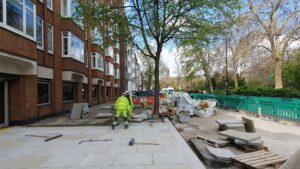
That means infrastructure increasingly needs to deliver several functions at the same time. A well-designed green street can provide shade during hot weather, support cooling through a healthy tree canopy and provide sufficient soil to retain moisture and support root growth. When heavy rainfall arrives, SuDS features can help slow, store and manage water closer to where it falls.
The Climate Change Committee has identified heat, flooding and drought as three of the UK’s biggest climate risks. Responding effectively will require a combination of resilient buildings, drainage, water infrastructure, public realm and green infrastructure, designed to work together as conditions continue to change.
Green Infrastructure Is Infrastructure
Green infrastructure has an increasingly important role to play in how UK towns and cities respond to heat, drought and intense rainfall.
Mature trees provide shade and cooling. Healthy soils support long-term tree growth and help retain water. Rain gardens and SuDS features can slow and manage runoff close to where it falls. Together, these systems can support biodiversity, reduce pressure on drainage networks and improve climate resilience.
The strongest outcomes will come from designing green and grey infrastructure together from the outset.
As the UK experiences hotter summers, longer dry periods and more intense rainfall, infrastructure needs to respond to several pressures at once. Streets and neighbourhoods should be designed to provide shade, manage water locally and support healthy vegetation over the long term.
That means creating cooler places without relying solely on increased energy use, reducing runoff before it contributes to flood risk, and making better use of rainfall to support the trees and planting that help communities cope with heat.
These are practical infrastructure challenges that need to be addressed in the way we design towns and cities now.