The National Planning Policy Framework (NPPF) was updated on 17 August 2026, including an important change to the way Sustainable Drainage Systems (SuDS) are addressed through planning. There has already been plenty of discussion around what this means, so it is worth starting with what hasn’t changed.
SuDS have not suddenly become a new planning requirement. The previous NPPF already expected developments that could affect drainage to incorporate sustainable drainage systems.
The important change is in Policy F8, which now says that SuDS should be designed in accordance with the National Standards for Sustainable Drainage Systems.
That might sound like a relatively small addition, but it has wider implications for how we plan, design and demonstrate SuDS.
What has actually changed?
Until now, there has been a degree of separation between national planning policy and the National SuDS Standards. The 2026 NPPF brings the two together much more clearly.
Policy F8 points directly to the National Standards, while Annex C identifies a statement outlining how those standards have been achieved as information for proposals that could affect drainage.
This matters because the National Standards look at considerably more than attenuation. They cover seven areas: runoff destinations, everyday rainfall, extreme rainfall and flooding, water quality, amenity, biodiversity, and operation and maintenance.
So, while storage volume and discharge rates remain important, they are only part of the picture. A drainage strategy may now need to show where water is going and why, what happens to frequent smaller rainfall events, how polluted runoff is treated, what happens when the design capacity is exceeded and how the system will continue to function throughout its life.
It should also consider what the SuDS design contributes to the place itself.
SuDS needs to start earlier
Perhaps one of the most important implications is when SuDS conversations happen.
If we want SuDS to manage everyday rainfall, improve water quality, support biodiversity and create useful landscape features, we need to give it the space to do so. That can become much harder when the roads, plots, levels, planting and public realm have already been fixed, and the drainage strategy is expected to fit around them.
The National Standards begin with the destination of runoff. Can rainwater be reused? Can it infiltrate? Can it discharge to an above-ground water body? Only further down that hierarchy do surface-water and combined sewers appear.
Those questions can influence the wider layout of a development, particularly when considered alongside the standards for amenity and biodiversity.
This is where early collaboration between drainage engineers, landscape architects, developers and other disciplines becomes increasingly important. A good SuDS strategy should help shape the site, rather than simply deal with the water once everything else has been designed.
What about the first 5 mm?
Another important part of the National Standards is the emphasis on everyday rainfall.
Much of the drainage conversation naturally focuses on larger storms and preventing flooding. But Standard 2 also looks at the smaller rainfall events that happen far more regularly, seeking to intercept at least the first 5 mm for the majority of events.
Rather than immediately conveying that water away, it can be reused, infiltrated or held within soils and vegetation where appropriate.
That changes the design conversation. A system capable of storing water during an extreme storm does not necessarily provide the same benefits as a system designed to manage rainfall closer to where it lands.
It is one reason why a combination of SuDS features can be so effective.
(Read more about the first 5mm in our SuDS at Source guide)
There isn’t one solution to all seven standards
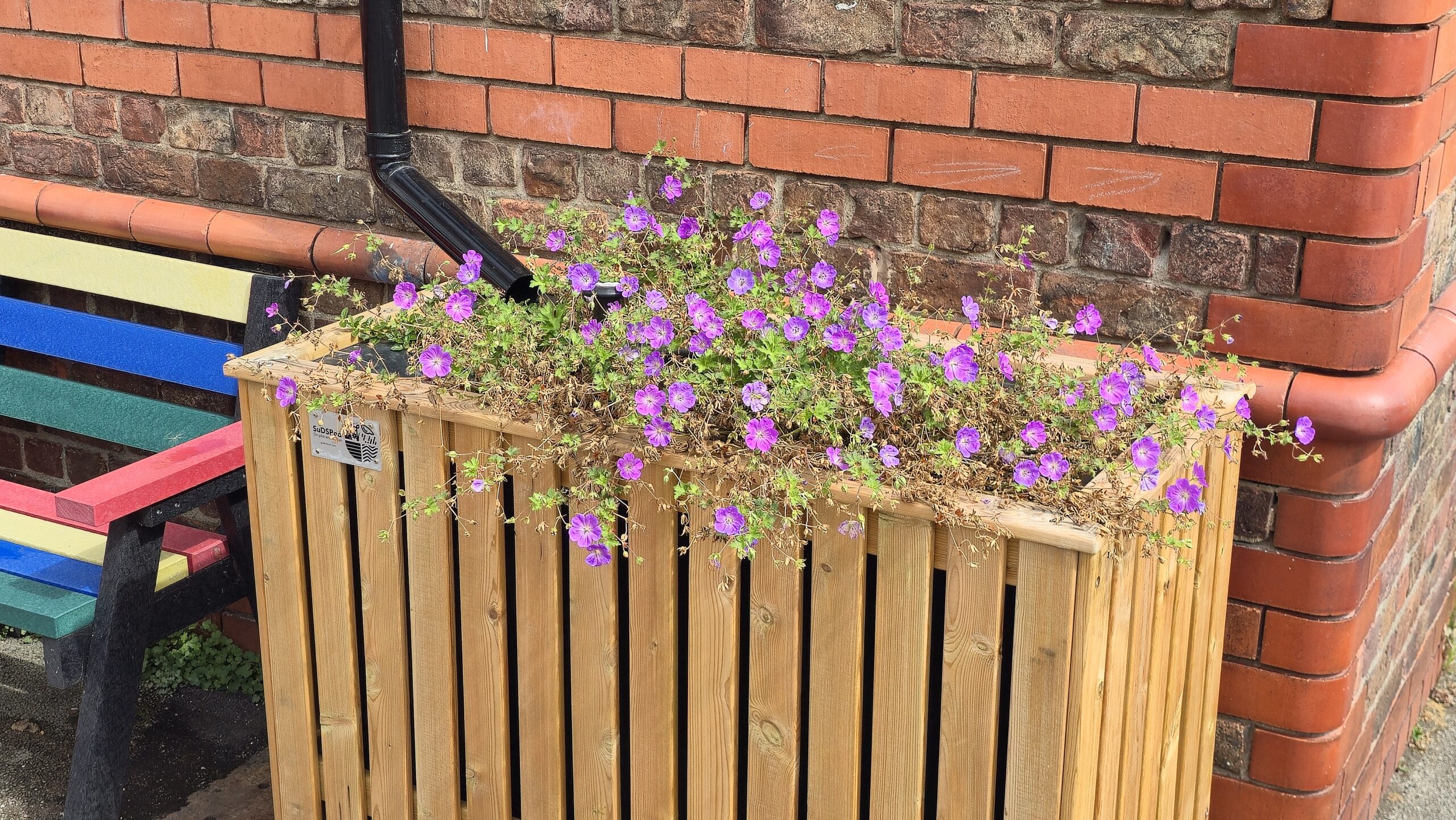
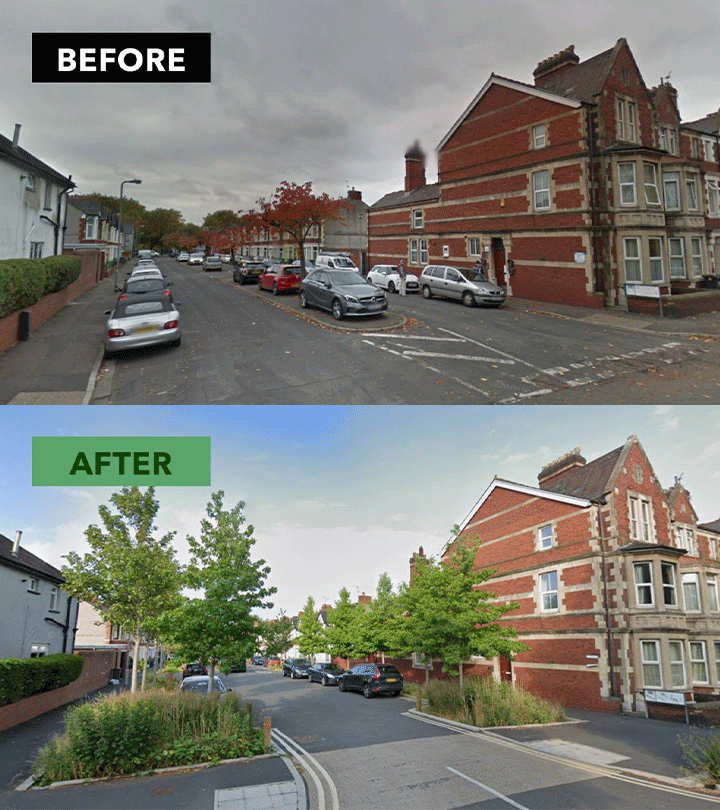
Rain gardens, SuDS tree pits, swales, permeable surfaces, SuDS planters, rainwater harvesting, basins, wetlands and below-ground attenuation can all have a role to play. As they don’t all do the same job.
A below-ground attenuation system, for example, can make a strong contribution to managing extreme rainfall, but provides limited direct contribution to amenity or biodiversity. A well-designed rain garden can contribute across water quantity, water quality, amenity and biodiversity.
That doesn’t make one approach right and another wrong. The appropriate solution will depend on the site.
Two SuDS interventions can also provide a similar volume of storage without necessarily providing the same performance. Different interventions control, store, infiltrate and release water in different ways, and their effectiveness can vary depending on the type of rainfall event.
This is why the combination of interventions across a site is so important. A well-designed scheme can bring together SuDS features with complementary characteristics, considering how water is managed during frequent smaller rainfall events as well as larger, less frequent storms. This creates a drainage strategy with greater resilience across a range of rainfall conditions.
What matters is understanding how different elements work together across the drainage strategy, rather than expecting one feature or product to meet every requirement.
This is the principle behind the SuDS management train: managing water progressively through a series of designed interventions, with each performing the role it is best suited to.
So, what should project teams be looking at?
For developments that could affect drainage, the starting point should be whether the design team can clearly explain how the seven National Standards have been addressed.
Where is runoff going, and have higher-priority destinations been properly considered? How is the first 5 mm being managed? What happens during extreme rainfall and where will exceedance flows go? How is water quality being protected?
There should also be a clear understanding of how the scheme contributes to amenity and biodiversity, who will maintain it and whether the features can realistically be accessed, inspected and maintained for the lifetime of the development.
These are not questions that can easily be answered at the end of the design process.
Is your SuDS strategy ready?
The principles behind good SuDS haven’t changed overnight. Managing rainfall close to source, considering water quality, designing for amenity and biodiversity and thinking about maintenance from the outset have long been central to good SuDS design.
What has changed is the planning context around them. The 2026 NPPF now provides a much clearer expectation that these principles are considered together and that project teams can demonstrate how their SuDS strategy responds to the National Standards.
We have produced a New Planning Expectations for SuDS guide that looks at Policy F8, breaks down each of the seven National Standards and explores how different SuDS approaches can contribute.
For teams wanting to explore the changes in more detail, our SuDS CPD also looks at how these principles translate into practical design decisions.