“Prepare for the unthinkable” was the warning from Natural Resources Wales earlier this month, as communities were urged to consider the possibility of increased autumn flooding. Long-range forecasts suggest a greater likelihood of wetter and windier conditions across Wales in the coming months.
Just days later, the Environment Agency declared severe drought in parts of southern England, following exceptionally low rainfall and declining reservoir levels. Meanwhile, insurer Aviva has raised concerns that some homes built in flood-risk areas could become increasingly difficult to insure in the future.
These three news stories highlight different challenges facing the UK, from immediate flood preparedness to longer-term water availability and property resilience. Although the circumstances vary, they raise an important question for those planning, designing and delivering our built environment.
How can we prepare our towns, cities and communities for conditions that are difficult to predict?
Understanding Risk Before Design Begins
Every site presents different challenges when it comes to water management. Ground conditions, topography, existing drainage infrastructure and surrounding land use all influence how a location responds to rainfall.
For developers, planners, landscape architects and engineers, understanding these conditions at the earliest stages of a project helps establish what can realistically be achieved.
This includes considering flood risk from different sources, assessing where surface water will naturally flow and identifying opportunities to accommodate water within the landscape.
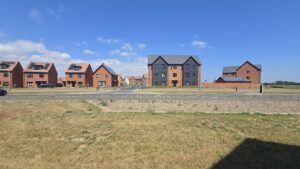
The recent concerns raised by Aviva also highlight the importance of considering long-term flood exposure when making development decisions. While Sustainable Drainage Systems (SuDS) can play an important role in managing surface water, wider flood risk considerations, including site selection, building design and appropriate flood protection, remain essential.
Considering these factors together allows drainage requirements to inform the layout and design of a development, with different disciplines contributing their expertise from the outset.

Designing for Both Water Scarcity and Excess Rainfall
The contrast between drought conditions in southern England and flood warnings in Wales demonstrates why water management needs to consider more than one set of circumstances.
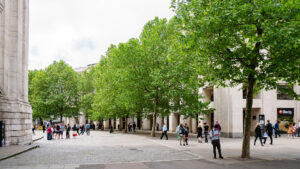
During prolonged dry periods, the availability of water becomes particularly important for establishing and maintaining healthy urban landscapes. Trees and planting need suitable growing conditions, including adequate soil volume, soil quality and access to moisture.
When heavy rainfall arrives, the considerations are different. The landscape needs to accommodate runoff, manage flow rates and provide appropriate storage or conveyance before water reaches downstream drainage infrastructure.
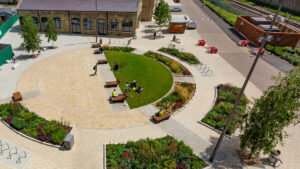
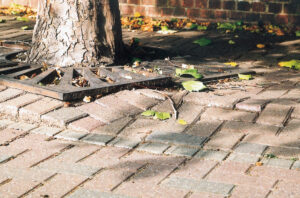
Nature-based SuDS can contribute to both objectives when designed appropriately. Rain gardens, SuDS tree pits and other planted features can help intercept and manage rainfall while supporting vegetation within the urban environment.
Making Better Use of Existing Urban Spaces
While new developments offer opportunities to incorporate water management from the beginning, improving the resilience of existing streets and public spaces is equally important.
Many established urban areas have limited space for additional drainage infrastructure. Roads, utilities, buildings and pedestrian routes all need to be accommodated, making the integration of new features more complex.
However, projects across the UK demonstrate how surface water management can be incorporated into improvements to the existing public realm.
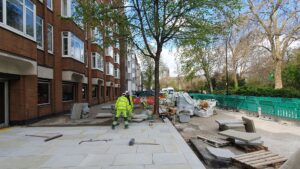
At Goldhurst Terrace in Camden, a residential street with a history of surface water flooding, rain gardens and SuDS tree pits have been integrated into the streetscape to help capture and manage runoff.
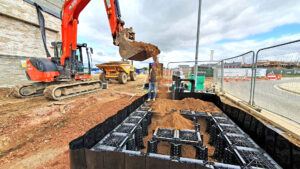
The scheme also provides improved underground growing conditions for street trees, supporting the wider objectives of urban greening and public realm improvement.
Projects such as this demonstrate how the available space within existing streets can be used more effectively, with drainage, landscape and highways requirements considered together.

Preparing for the Future
The recent weather headlines are a reminder that the challenges facing our built environment vary considerably across the UK. Flooding, drought and long-term property resilience each require appropriate responses, informed by local conditions and the available evidence.
There is already significant work taking place across the sector to improve the way water is managed, both within new developments and through improvements to existing infrastructure.
Continuing that progress requires collaboration between the professionals responsible for planning, designing, delivering and maintaining our towns and cities.
If you need support designing SuDS solutions for your project, get in touch with our team.